| Muay Thai | Kickboxing | |
|---|---|---|
| Strikes | Punches, kicks, knees, elbows (adults) | Punches and kicks |
| Clinch | Yes, a big part | Limited or none |
| Kids' focus | Technique, pads, fitness | Technique, pads, fitness |
| Typical cost | $120 to $220 a month | $100 to $200 a month |
Pick by goal
- Fitness and confidenceA kids' pad-work classHard workout with little contact.
- Under 7Taekwondo or karate firstMore structure and games for little ones.
- Competitive teenA gym with a youth teamMatched, regulated bouts.
On this page
Muay Thai and kickboxing gyms have multiplied across the US, and many now run classes for children and teens. They offer a fantastic workout and genuinely effective striking skills. They also involve more direct contact than most traditional martial arts, which is why parents should ask a few more questions before signing up.
Muay Thai and kickboxing: what is the difference?
Muay Thai is the national sport of Thailand, often called “the art of eight limbs” because it uses punches, kicks, knees and elbows. It also includes the clinch, a standing grappling position where fighters control each other’s head and arms to land knees and off-balance their opponent.
Kickboxing is a broader term for sports that combine boxing-style punches with kicks. Rules vary by organization, but most kickboxing allows only punches and kicks, and some allow knees. In practice, children’s classes at Muay Thai and kickboxing gyms often look very similar: lots of pad work, bag work and conditioning.
What a kids’ class looks like
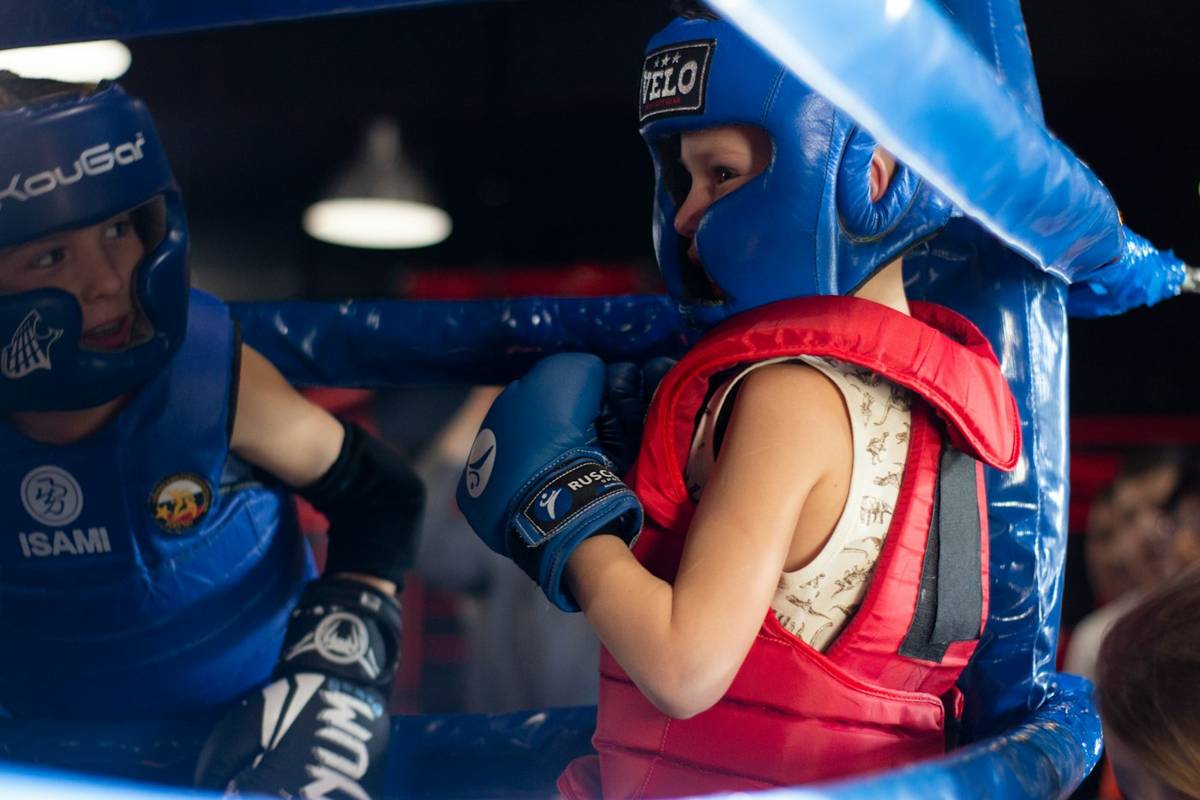
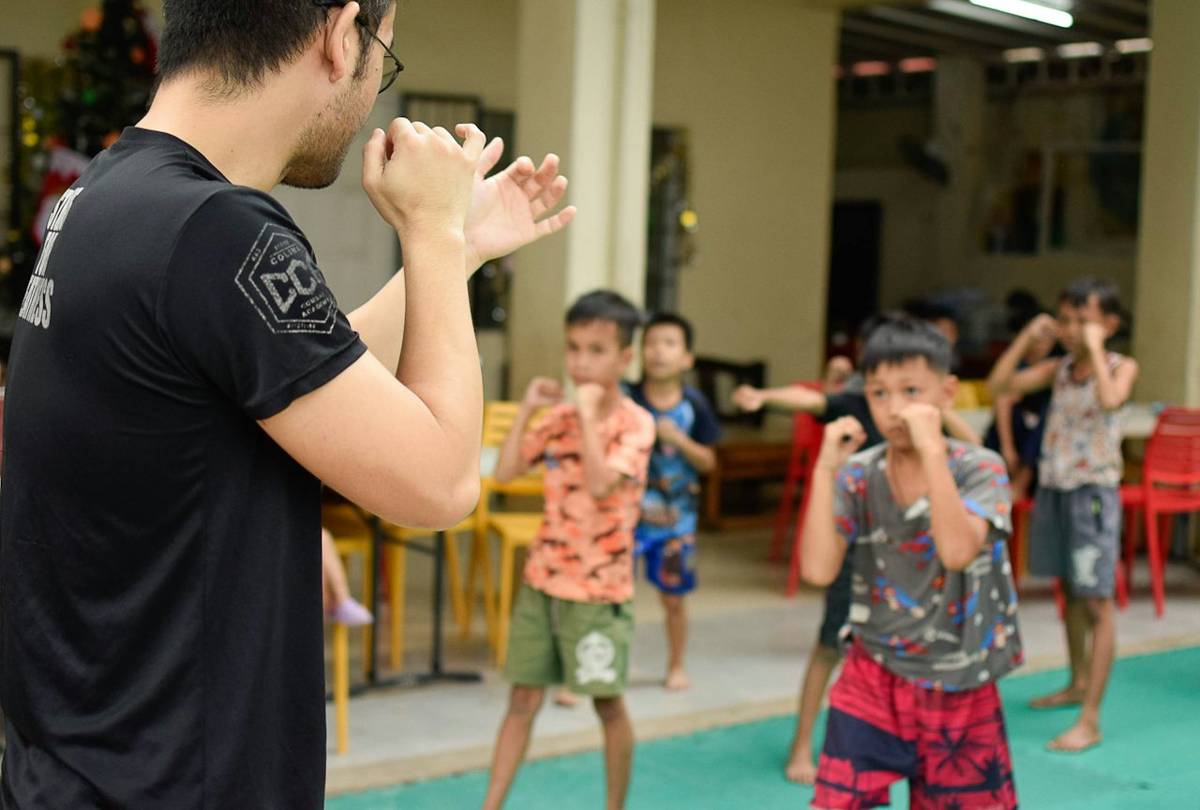
A good kids’ class starts with a playful warm-up and skipping, then teaches basic technique, stance, guard, jab, cross, roundhouse kick and teep (push kick), practised in the air, on bags and on pads held by coaches or partners. Classes often include fitness games and finish with conditioning. In good children’s programs, elbows and knees to the head are not used, and partner work is controlled.
Contact and safety
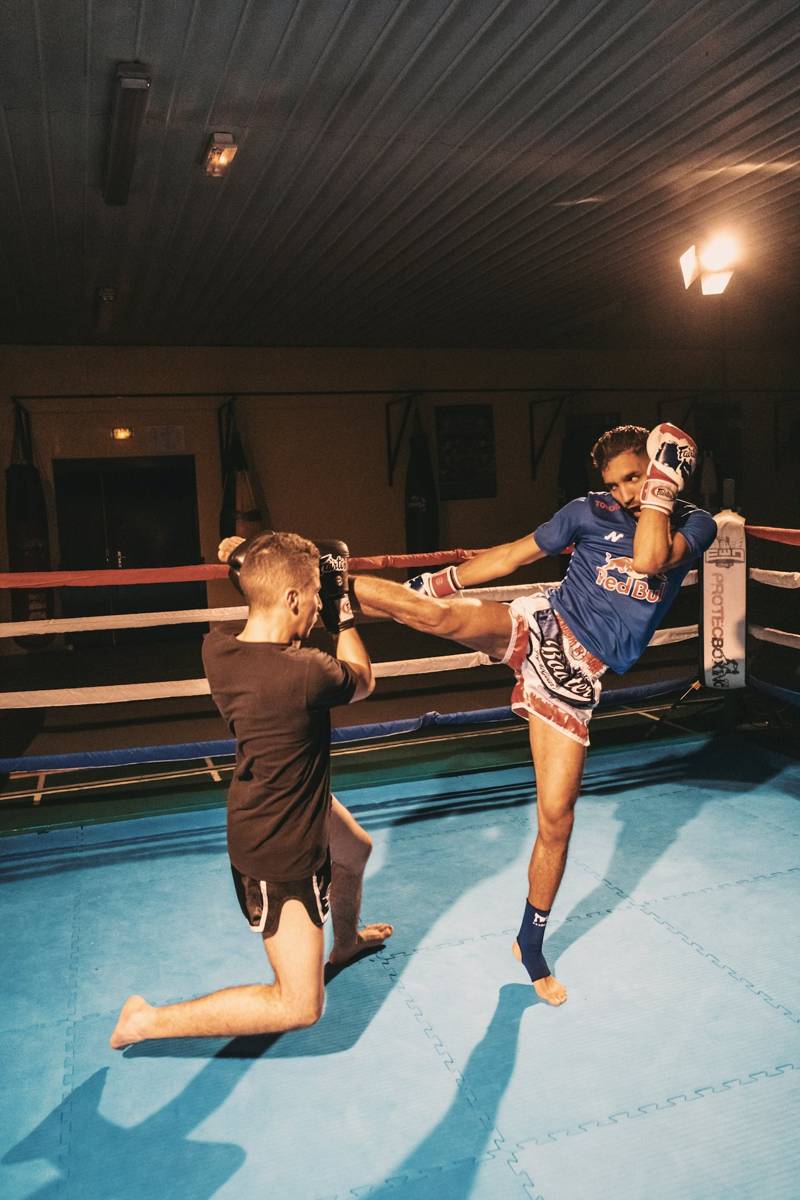
The key safety question for any striking sport is head contact. Pediatric guidance takes concussion in young athletes very seriously, and repeated hard hits to the head are something to avoid in children. A responsible kids’ program keeps sparring light and technical, introduces it gradually and only for older, more experienced children, requires headgear, mouthguards, gloves and shin guards, and supervises closely. Some gyms do no sparring for young children at all.
Ask the gym directly: At what age does sparring start? What contact is allowed? What gear is required? Who supervises? A gym that answers clearly and conservatively is a good sign. A gym that puts young children into hard sparring is not.
Best starting age
Some gyms run fitness-focused classes from six or seven, but most families find these styles work best from about eight and up, with controlled sparring introduced in the teen years. For younger children, a traditional martial art with more structure and less contact, or a grappling art, may be a better first step. See our guide to the best age to start.
Gear and cost
Children need boxing gloves, hand wraps, a mouthguard and, for partner work and sparring, shin guards and headgear. Muay Thai gyms are usually commercial, with prices from mid-range to high depending on the city. Many gyms are built mainly for adults, so check that the kids’ program has its own classes and qualified coaches. See our cost by style guide.
Benefits
Muay Thai and kickboxing build outstanding fitness, coordination, power and confidence, and the striking skills are among the most effective there are. For teens especially, a good gym can be a positive, motivating community.
The wai kru and Thai traditions
Many Muay Thai gyms keep Thai traditions that children enjoy. Before bouts, fighters perform the wai kru ram muay, a slow ritual dance that honors their teachers, and some gyms teach a simple version to kids. Fighters may wear a mongkol, a headband, and prajead, armbands, given by their coach. Thai words appear in class too: kru means teacher, and many gyms use Thai names for strikes such as teep, the push kick. These traditions give the sport a respectful side that surprises parents who expect pure fighting. Ask whether your gym teaches them. Our Muay Thai profile has more words and a look at the first year.
Is it right for your child?
Muay Thai and kickboxing suit older children and teens who want a demanding workout and real striking skills, at a gym with a proper youth program and a cautious approach to contact. For younger children, or if self-defense without striking is the goal, also compare BJJ, judo and Taekwondo, and read our overview of the best martial art for kids.
Questions parents and students ask
What age can kids start Muay Thai?
Some gyms run fitness-style kids' classes from about six or seven, focused on pad work and technique without hard contact. Most families find Muay Thai and kickboxing work best from about eight, with sparring introduced gradually in the teen years.
Is Muay Thai safe for children?
Technique and pad work are safe. The main risk is head contact in sparring, so look for a kids' program where sparring is light, controlled, supervised and done with headgear and proper gear, or not done at all for young children.
What is the difference between Muay Thai and kickboxing?
Muay Thai uses punches, kicks, knees and elbows plus clinch fighting. Kickboxing usually uses punches and kicks only, and some rule sets allow knees. Kids' classes in both often look similar.