| Aikido for kids | |
|---|---|
| Starting age | About 6, some dojos from 5 |
| Sparring | None; cooperative practice |
| Competition | Almost none |
| Ranks | Kyu grades, then dan grades |
| Typical cost | Often modest at clubs |
Pick by goal
- Gentle, non-competitiveAikidoNo sparring and no tournaments.
- Throwing with a sportJudoSimilar falls and throws, with competition.
- Self-defense with pressure testingBJJ or judoBoth practise against a resisting partner.
On this page
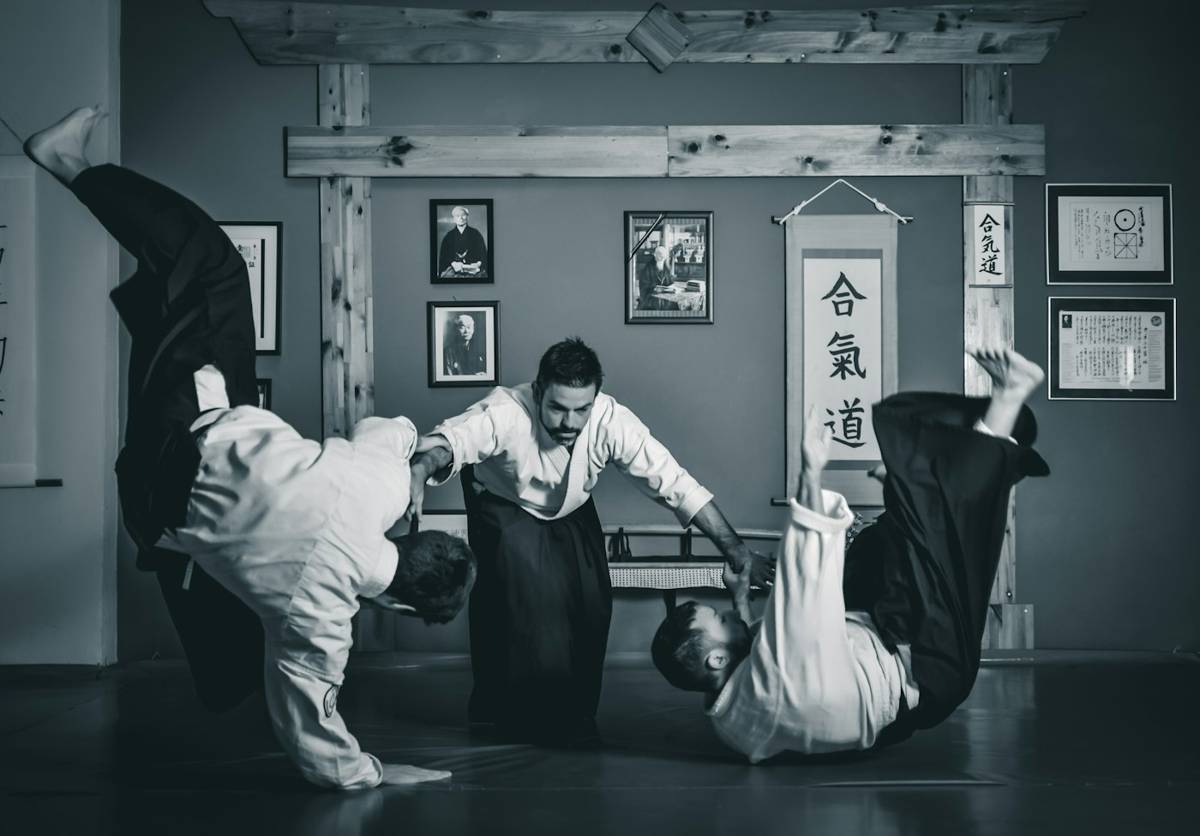
Aikido often looks like a dance: one person attacks, the other turns, blends with the movement and sends the attacker rolling across the mat. It is one of the most graceful martial arts, and its philosophy of resolving conflict without harming the attacker appeals to many parents. It is also different from most styles in important ways.
What aikido is
Aikido was developed in Japan by Morihei Ueshiba in the 1920s and 1930s, drawing on older Japanese jujutsu, especially Daito-ryu, as well as sword and spear arts. Its name is often translated as “the way of harmonising energy”. Instead of meeting force with force, aikido teaches students to move off the line of attack, blend with an attacker’s motion and redirect it into throws, pins and joint locks.
No competition
Most aikido is non-competitive. Training is cooperative: partners take turns as the attacker and the defender, and the attacker learns to fall safely from each technique. One branch, Shodokan or Tomiki aikido, does hold competitions. The lack of competition makes the atmosphere calm and supportive, but it also means techniques are not regularly tested against full resistance, which is why some people question aikido’s value for self-defense.
What kids’ classes look like
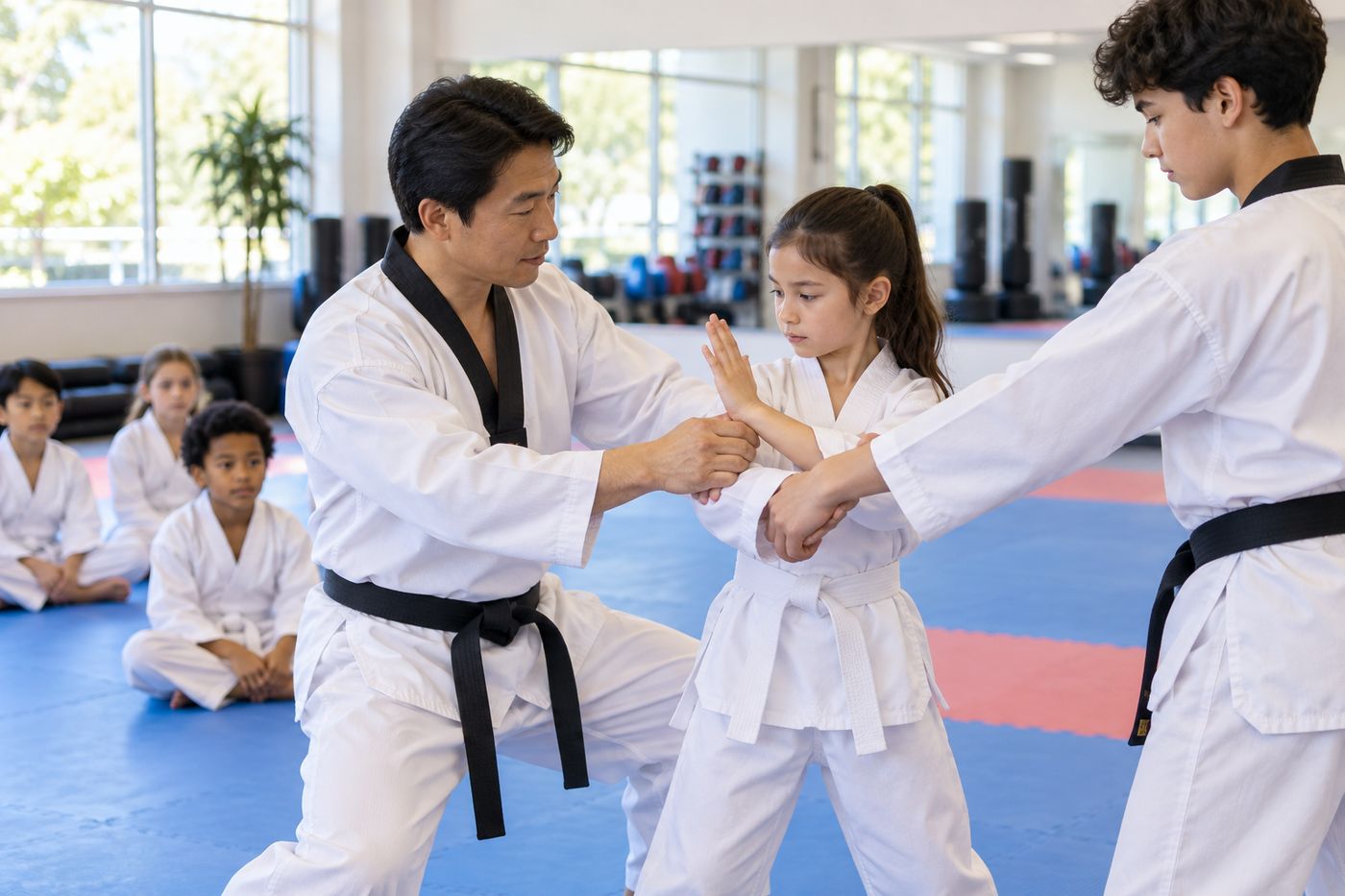
Children’s classes usually start with a bow and warm-ups, then lots of ukemi, rolling and falling practice, which children love and which protects them for life. Then the instructor shows simple techniques that children practise with partners: getting off the line, turning, and basic throws and pins. Joint locks are taught gently, with care for growing bodies. Many dojos include games that build balance and awareness.
Ranks
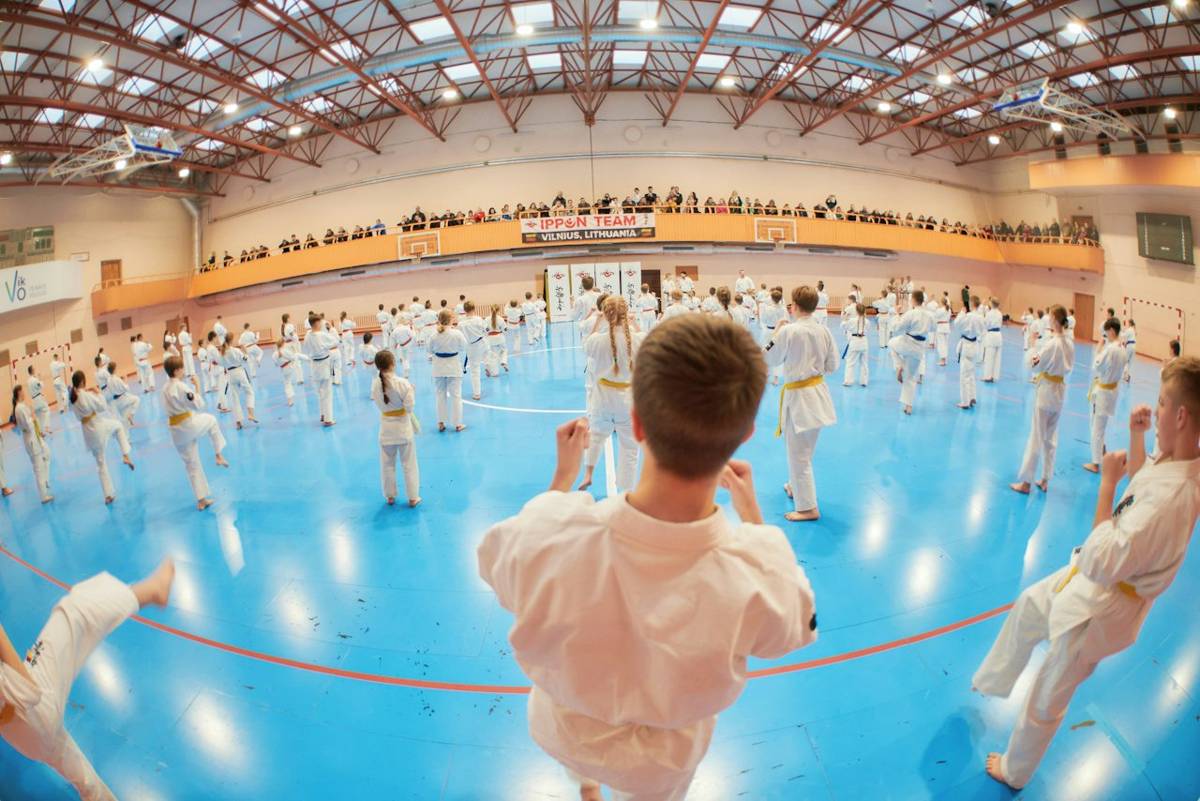
Aikido uses kyu and dan grades. Many dojos give children colored belts, while adults often wear white until black belt. Senior students, and sometimes all black belts, wear the hakama, the wide pleated trousers that give aikido its distinctive look. Gradings are usually formal demonstrations of technique and falling.
Safety
Aikido is generally safe for children when falls are taught progressively on good mats and joint techniques are applied slowly. Ask how the instructor adapts techniques for children.
Costs
Many aikido dojos are small and run by dedicated teachers, sometimes as nonprofits, and fees are often modest. Uniforms are similar to judo or karate uniforms.
Aikido or judo?
Parents often weigh aikido against judo, since both come from Japan and both teach throws and falls. The big difference is resistance. In judo, children practise randori, free practice where the partner really tries not to be thrown, and many go on to compete. In aikido, the partner attacks in a set way and then falls, so children can practise techniques smoothly without a struggle. Judo builds strength, grit and competitive experience; aikido builds timing, softness and calm. A child who loves rough play and winning usually prefers judo, while a careful child who dislikes conflict may thrive in aikido. Both teach excellent falling skills. See our aikido profile and judo guide for more.
Is aikido right for your child?
Aikido suits calm, curious children who enjoy movement and cooperation more than competition, and families who value its peaceful philosophy. If you want tested self-defense or a sport, compare judo and BJJ, which also teach throws and falling but include live practice against resistance. For a wider view, see the best martial art for kids.
For the facts at a glance, a parent scorecard and what a typical class looks like, see our Aikido profile.
Questions parents and students ask
Is aikido good for kids?
Aikido can be excellent for coordination, falling safely, calm focus and respect. Because it has no competition and little live resistance, it is less suited to families whose main goal is sport or tested self-defense.
Does aikido have competitions?
Most aikido has no competitions; training is cooperative. One branch, often called Shodokan or Tomiki aikido, does hold competitions.
What age can kids start aikido?
Many dojos run children's classes from about six, focused on rolling, falling and simple movements, with joint techniques taught gently and later.