| Taekwondo | Judo | |
|---|---|---|
| Type | Striking, mostly kicks | Grappling: throws, falls and pins |
| Solo routines | Poomsae forms at every belt | Almost none for children |
| Live practice | Padded sparring, a few belts in | Randori with a partner from early on |
| Falling | Rarely taught | Taught from day one |
| Belt pace | New belt every few months | Slower, often decided in class |
| Olympic | Yes, since 2000 | Yes, since 1964 |
| Where taught | Mostly commercial schools | Many nonprofit and community clubs |
| Typical cost | About $100 to $250 a month plus testing | Often much cheaper |
Pick by goal
- Loves to jump and kickTaekwondoKicking drills fill every class.
- Loves wrestling aroundJudoGripping and throwing all class long.
- Needs frequent rewardsTaekwondoBelts come every few months.
- Self-defense and valueJudoLive practice and low club fees.
On this page
Taekwondo and judo are both Olympic sports, both popular with children, and in many American towns there is one of each within a short drive. Beyond that they have almost nothing in common. Taekwondo is a Korean striking art famous for fast, high and spinning kicks. Judo is a Japanese grappling art built on throws, falls and pins. A child who loves one may not enjoy the other at all, which makes this one of the easier comparisons to get right once you know what each class involves.
For more on each art, see Taekwondo for kids and judo for kids, or start with the comparison of all the main styles.
Kicks versus throws
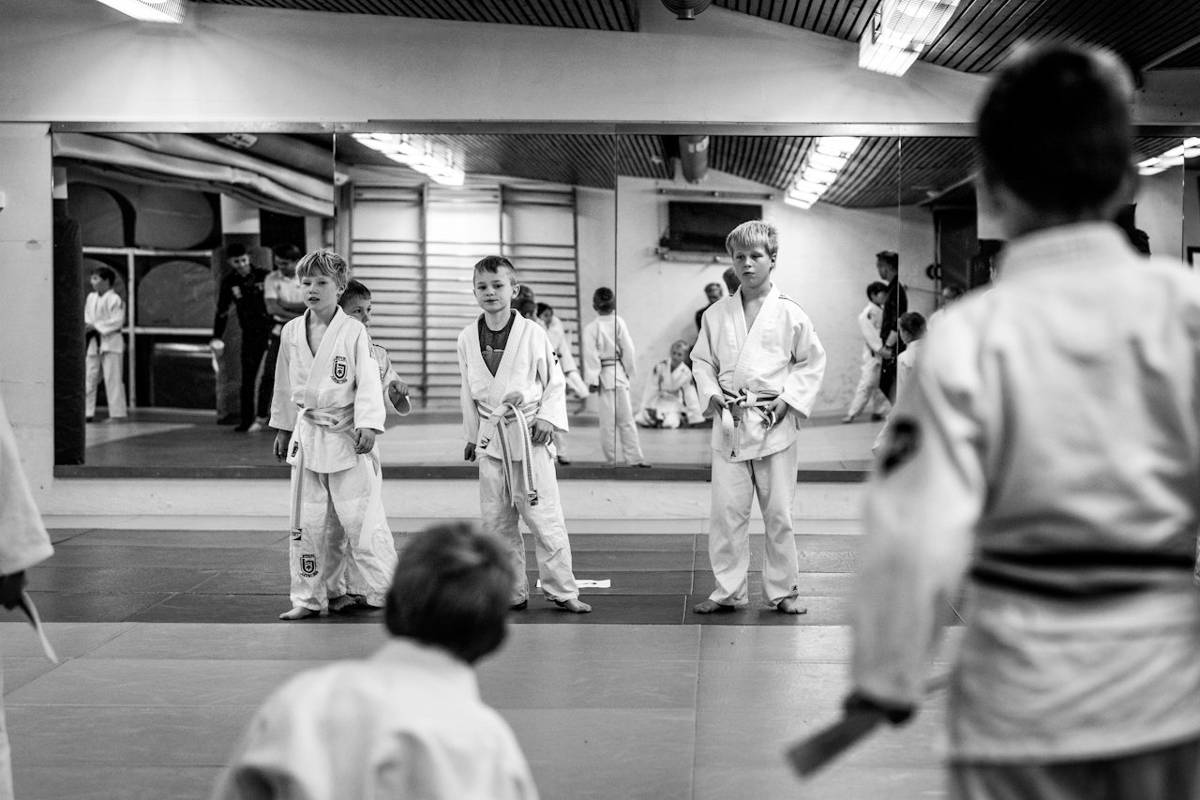
In a Taekwondo class, children spend most of their time kicking: front kicks and roundhouse kicks at first, then side, back and hook kicks, and eventually jumping and spinning kicks. Classes are fast and energetic, with lines of children kicking pads, practising forms and, a few belts in, sparring in padded vests and head guards. Hands are used for blocks and some punches, but kicking is the heart of the art. Our kicks library shows the full range.
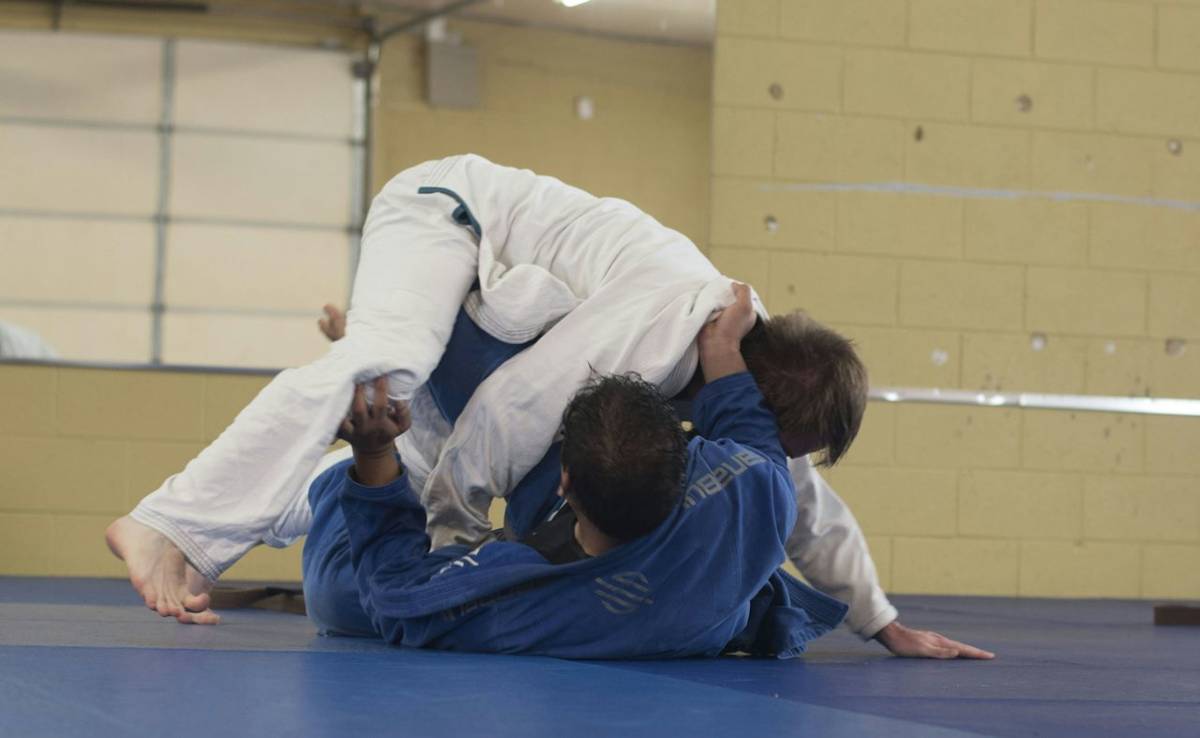
In a judo class, children grip each other’s jackets and learn to unbalance and throw a partner onto the mat, then follow up with pins on the ground. There are no punches or kicks at all. Classes include a lot of partner work and end with randori, free practice against a resisting partner. Judo is close, physical and tiring in a different way: less running and jumping, more pulling, pushing and lifting.
How it feels for a young child
Taekwondo is easy for a young child to love. It is loud and lively, the kicks look impressive, and many schools award a new belt every few months, so there is always a goal in sight. Contact is limited early on, which suits children who are not keen on being grabbed.
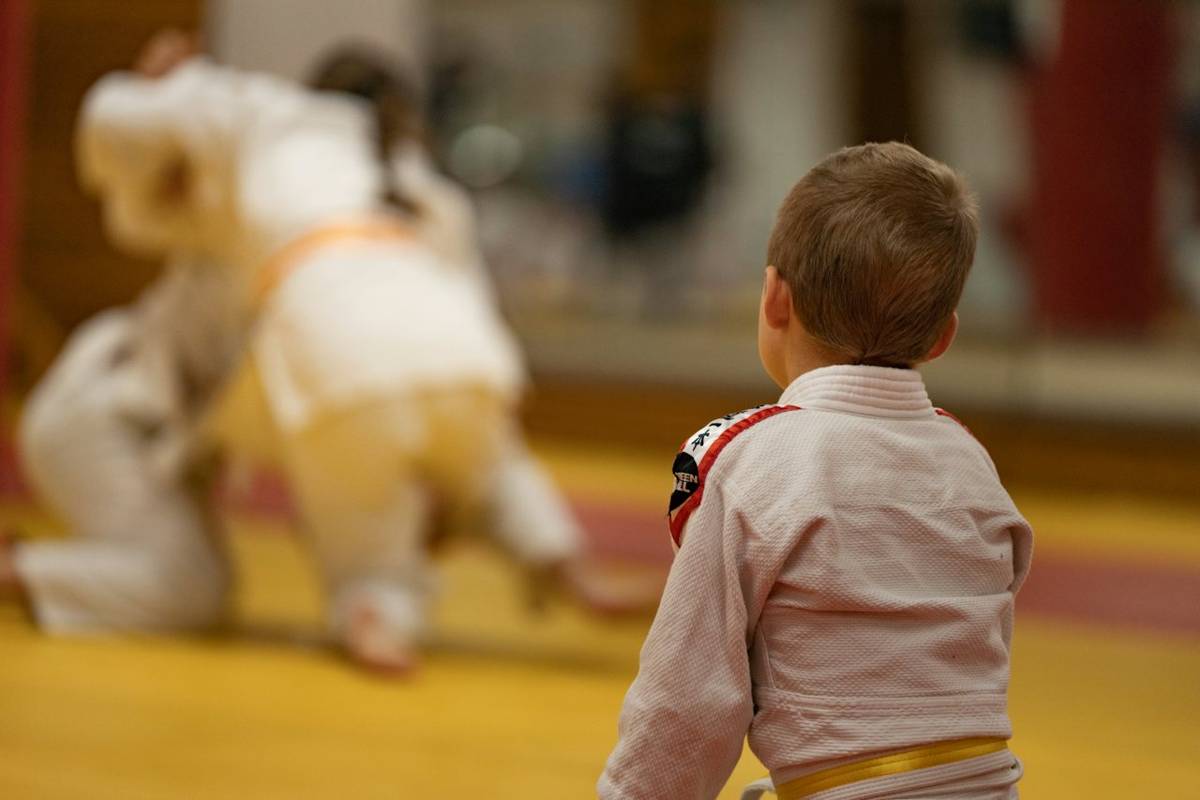
Judo can feel more intense at first because it is so hands-on, but young children who enjoy rough-and-tumble play usually love it. Good judo coaches use lots of games for small children and spend weeks teaching how to fall safely before throws become a big part of class. Children who are timid at first often grow noticeably more confident once they realize falling does not hurt.
Sparring and self-defense
Taekwondo sparring follows Olympic-style rules: points for kicks to the padded body protector and the head, and limited punches to the body. It teaches speed, distance and timing, and builds real composure. Its weakness for self-defense is that most real conflicts between children close the distance quickly and turn into shoving and grabbing, where kicks are hard to use.
Judo is built for exactly that range. Children practise balance, gripping, throwing and pinning against resistance from early on, which is why grappling arts are so often recommended for self-defense and for children who are being bullied. For more, see our guide to the best martial art for a bullied child.
Belts and progress
Taekwondo has one of the fastest belt systems in martial arts. Many schools test every two to four months, and children commonly earn a junior black belt, called a poom belt in the Kukkiwon system, after about three to five years. Our belt order guide explains the colors.
Judo moves more slowly. Promotions are often decided in class, testing fees are usually modest, and black belt has a minimum age in the mid-teens. Children who need regular rewards may find the pace frustrating; children who love the sport itself rarely mind.
Competition
Both are Olympic sports with structured youth competition. Taekwondo tournaments are common and easy to enter, with sparring and forms divisions, and many use electronic scoring vests. Judo tournaments are less frequent in most of the US but offer a clear path from local events to national championships. In both, competition is optional.
Safety
Taekwondo’s main risks are knocks from sparring and strains from high kicks, which protective gear and gradual flexibility training keep low. Head contact is limited and controlled for children at good schools. Judo’s main risks are sprains and bumps from falls, reduced by the heavy emphasis on breakfalls. Chokes and armlocks are not taught to young children.
Cost
Taekwondo is mostly taught at commercial schools, where children’s tuition usually falls around $100 to $250 a month, plus belt testing fees and sparring gear. Judo is often far cheaper because so many clubs are nonprofits. Ask any school for the full yearly cost in writing, or use our cost calculator to compare.
Which should your child choose?
Choose Taekwondo if your child is energetic, flexible and loves to kick, likes clear goals and frequent rewards, or prefers not to be grabbed. Choose judo if your child is physical and enjoys wrestling around, if self-defense and learning to fall matter most to you, or if cost is a concern. Still undecided? Our quiz can narrow it down, and a trial class at each will settle it.
Typical ranges at reputable schools. Taekwondo and karate award junior black belts to children; judo and BJJ set minimum ages for black belt.
Questions parents and students ask
Is Taekwondo or judo better for kids?
It depends on the child. Taekwondo suits energetic, flexible kids who enjoy kicking and frequent belt goals. Judo suits physical kids who enjoy close contact, and it teaches safe falling and practical balance. The quality of the club matters more than the style.
Which is better for self-defense, Taekwondo or judo?
For the shoving and grabbing that most children's conflicts involve, judo's balance, throws and falling skills are usually more directly useful. Taekwondo teaches distance, speed and confidence, and its value rises at schools that spar regularly.
Can a child switch from Taekwondo to judo?
Yes. Flexibility, fitness and discipline carry over, though the techniques are completely different. A child will start judo at white belt but usually progresses quickly through the first ranks.