| BJJ | Wrestling | |
|---|---|---|
| Main focus | Ground control, escapes and submissions | Takedowns, pins and escapes |
| Pace | Patient and technical | Fast and explosive |
| Fighting off your back | A normal, strong position | A position to escape at once |
| Belts | Kids' belts and stripes | None |
| When | Year round | Seasonal; school teams mostly in winter |
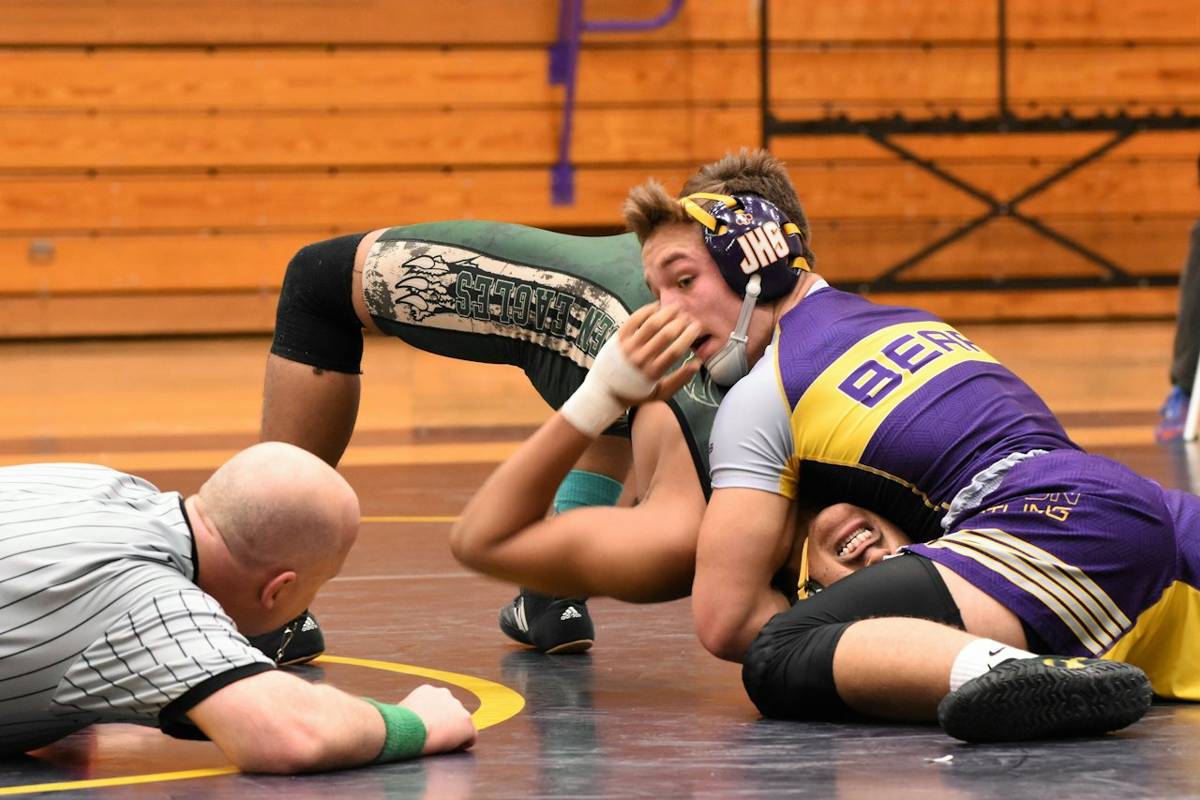
| Uniform | BJJ gi, or rash guard and shorts | Singlet, wrestling shoes, headgear |
| Olympic | No | Yes |
| Typical cost | Often the top of the $100 to $250 a month range | Usually the cheapest martial sport |
Pick by goal
- Wants a school teamWrestlingYouth clubs lead into middle and high school teams.
- Thoughtful, patient kidBJJRewards problem solving over pure athleticism.
- Lowest costWrestlingSeasons and school programs cost little.
- Year-round trainingBJJAcademies run every week of the year.
On this page
Brazilian Jiu-Jitsu and wrestling are both grappling sports, and both teach a child to control another person without throwing a punch. That shared foundation is why they come up so often when parents ask about self-defense or bullying. But a wrestling room and a jiu-jitsu academy feel very different, and they reward different kinds of children.
For more on each, see BJJ for kids and wrestling for kids, or the comparison of all the main styles.
Takedowns versus ground work
Wrestling is won on the feet as much as on the ground. Matches start standing, and the biggest skill is the takedown: changing levels, shooting for the legs and driving an opponent to the mat. Once down, a wrestler fights to turn the opponent onto their back for a pin, while the wrestler underneath scrambles to escape or reverse. There are no submissions, and being on your back is the worst place to be.
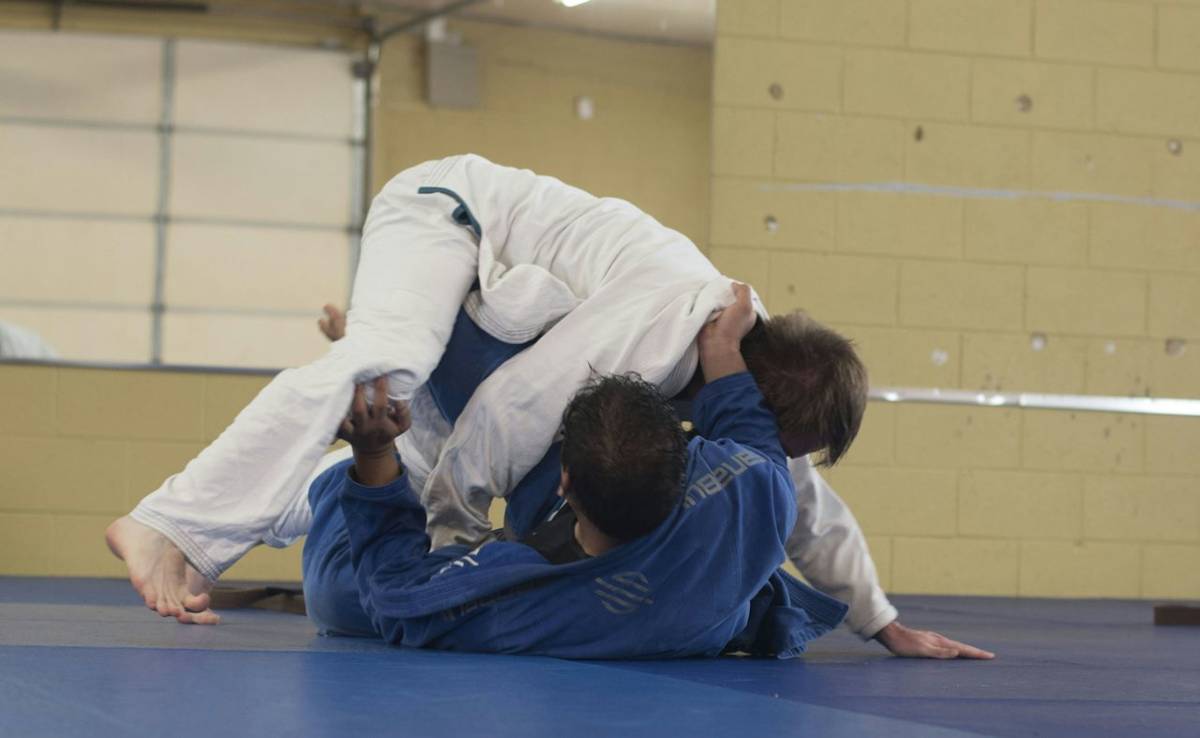
BJJ spends most of its time on the ground. Children learn to hold positions, escape from bad ones and, as they get older, apply submissions such as joint locks and chokes under rules that protect younger children. Crucially, BJJ teaches children to fight comfortably from their back using the guard, wrapping their legs around an opponent to control them. Takedowns are part of BJJ but get far less attention than in wrestling.
Pace and personality
A wrestling practice is relentless: drilling, live wrestling and conditioning, often finished with sprints. Children who love to compete, push themselves and burn off energy thrive in it. Wrestling builds remarkable toughness, and many coaches in other sports value former wrestlers for that reason.
BJJ is calmer and more cerebral. It is often described as chess on the mat, because success depends on patience, leverage and thinking a step ahead. Rolling is still physically demanding, but a smaller or less athletic child can do very well through technique. Thoughtful children who are not natural athletes often find their sport in BJJ.
Progress, belts and seasons
Wrestling has no belts. Progress shows in match results and in moving up through local, state and national events. Youth wrestling often follows seasons: folkstyle, the scholastic style, in winter, and freestyle and Greco-Roman, the Olympic styles, in spring and summer.
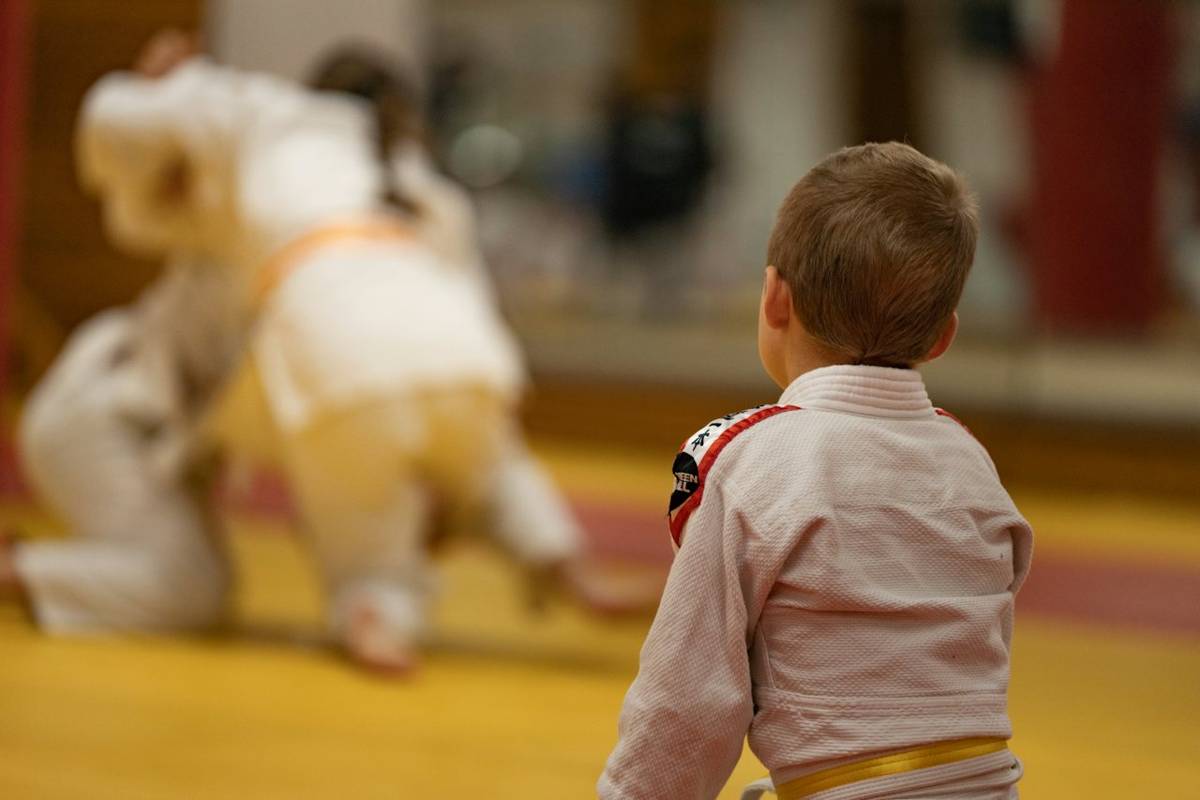
BJJ has a kids’ belt system with stripes between belts, run under the guidelines of the International Brazilian Jiu-Jitsu Federation at most academies. Promotions are slow and decided by the coach, usually without a fee. Classes run all year. Our BJJ belts guide shows the full order.
Safety
Both sports are reasonably safe for children with good coaching. In wrestling, the main concerns are skin infections on shared mats, neck and shoulder strain in scrambles, and weight cutting before weigh-ins as children get older, which a good coach discourages firmly. In BJJ, the main risks are joint strains, which come mostly from submissions applied too fast; good academies teach children to tap early and partners to let go immediately, and they restrict dangerous techniques for younger age groups.
Cost
Wrestling is usually the cheapest combat sport available. School teams cost little, and youth clubs often charge per season, plus a yearly membership card for competition. BJJ academies are mostly commercial and often sit at the higher end of martial arts pricing, though they rarely charge for belt promotions. Our cost calculator compares the full yearly cost.
Which should your child choose?
Choose wrestling if your child is athletic and competitive, wants to join a school team, or if cost matters. Choose BJJ if your child is thoughtful, enjoys problem solving, prefers year-round classes with belts to work toward, or is smaller and wants a sport where technique beats size. If both are close by, do not overthink it. Wrestling and BJJ fit together so well that many families end up doing both.
Questions parents and students ask
Is BJJ or wrestling better for self-defense?
Both are excellent. Wrestling is better at taking someone down and staying on top; BJJ is better at escaping from underneath and controlling from any position. Many coaches consider the combination ideal, and plenty of children do both.
Is wrestling harder than BJJ?
Wrestling practices are usually more physically exhausting, with lots of conditioning and live wrestling. BJJ is less intense on the lungs but has a huge amount of technique to learn. Each is hard in its own way.
At what age can kids start BJJ or wrestling?
Many BJJ academies take children from about 4 or 5. Youth wrestling clubs often start around 5 or 6, though many children begin in middle school. Both work well for teenagers starting from scratch.