On this page
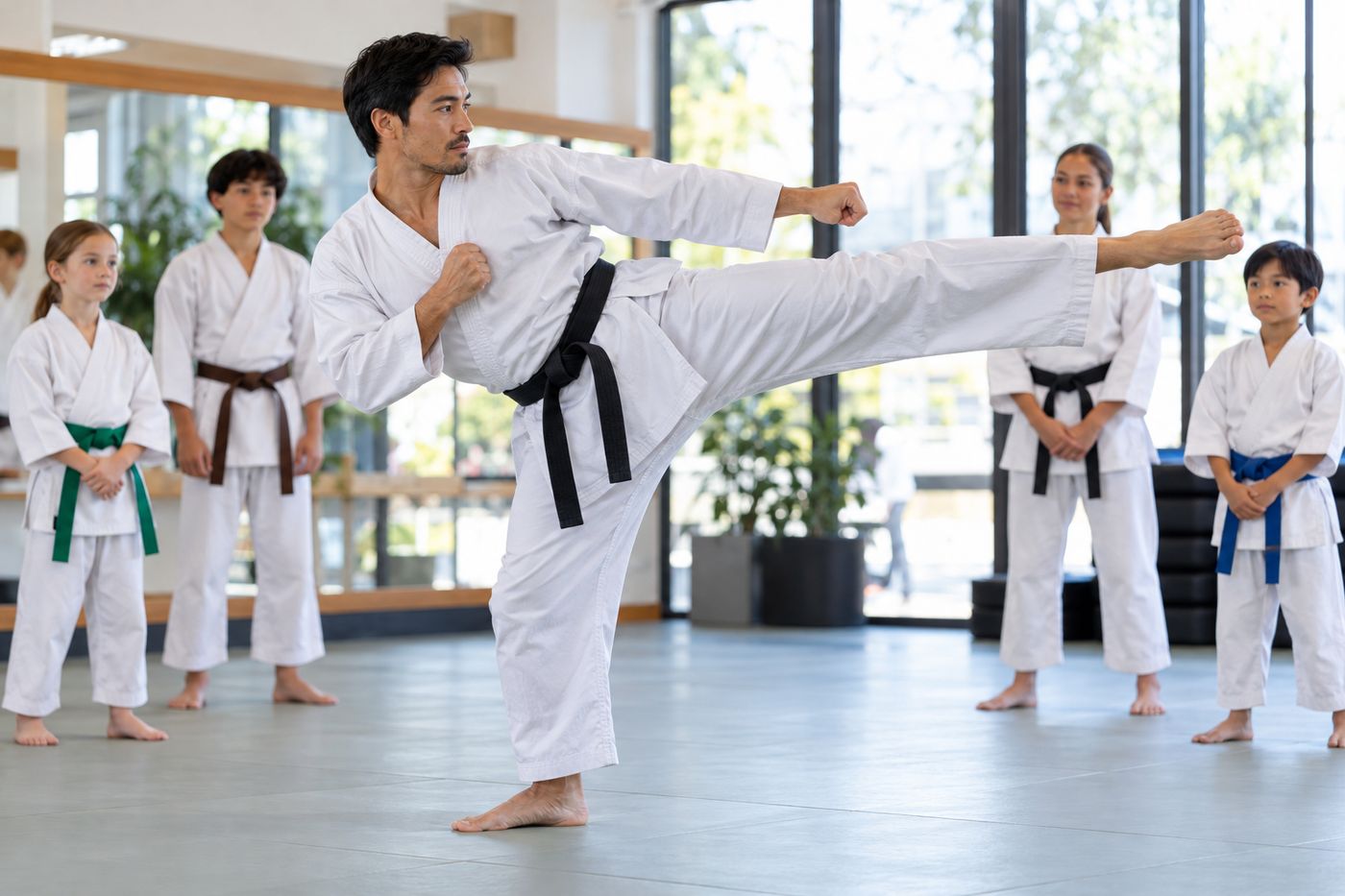
Crescent kicks are the straight-leg kicks that swing in an arc across the front of the body, tracing the shape of a crescent moon. There are two: the inside crescent kick (often called an chagi, 안차기), which swings from the outside in, and the outside crescent kick (often bakkat chagi, 바깥차기), which swings from the inside out. They are not big scoring kicks, but almost every Taekwondo class uses them, because they warm up the hips, build flexibility and teach the leg control that the axe kick and spinning kicks need.
What crescent kicks are used for
Crescent kicks are mostly a training tool. In warm-ups they loosen the hips and hamstrings. In drills they teach students to control a straight leg through a big range of motion. In sparring they can sweep aside an opponent’s arm or set up another kick, and they form the first half of an axe kick. Some schools also use the inside crescent as a target kick, swinging the sole of the foot into the palm of your own hand.
How to do an inside crescent kick
- Start in a fighting stance or a front stance, guard up.
- Swing the back leg up and out to the side, keeping it nearly straight, so the foot passes outside your shoulder.
- Continue the arc across the front of your body at head height, striking with the inside edge or sole of the foot.
- Let the leg come down on the opposite side of your body and step back into your stance.
How to do an outside crescent kick
- Start in a fighting stance or a front stance, guard up.
- Swing the back leg up across the body toward the opposite shoulder, keeping it nearly straight.
- Continue the arc outward across the front of your face, striking with the outside edge of the foot.
- Let the leg come down on the same side it started and return to your stance.
In both kicks, keep your upper body upright and your hips square to the front. The leg does the work, not a twist of the torso.
Common mistakes
Bending the knee is the most common error. A bent knee shrinks the arc and turns the kick into a sloppy roundhouse. Keep the leg long, and if you cannot get it high with a straight leg, kick lower until flexibility improves.
The second is leaning back or twisting the torso to get height. Stand tall and let the hips open. Third, students often let the leg drop at the end of the arc with no control. Lower it deliberately. Last, swinging too fast before warming up can strain the hamstrings, so start low and slow.
Drills to practise at home
Leg swings. Hold a wall or chair and swing one straight leg in an inside arc ten times, then an outside arc ten times. Gradually raise the height.
Palm target. Hold one hand out at chest height and swing an inside crescent into the palm with the sole of the foot. Raise the hand as you improve.
Slow arcs. Perform each crescent in slow motion, taking three seconds for the full arc. This builds the hip strength to hold the leg up.
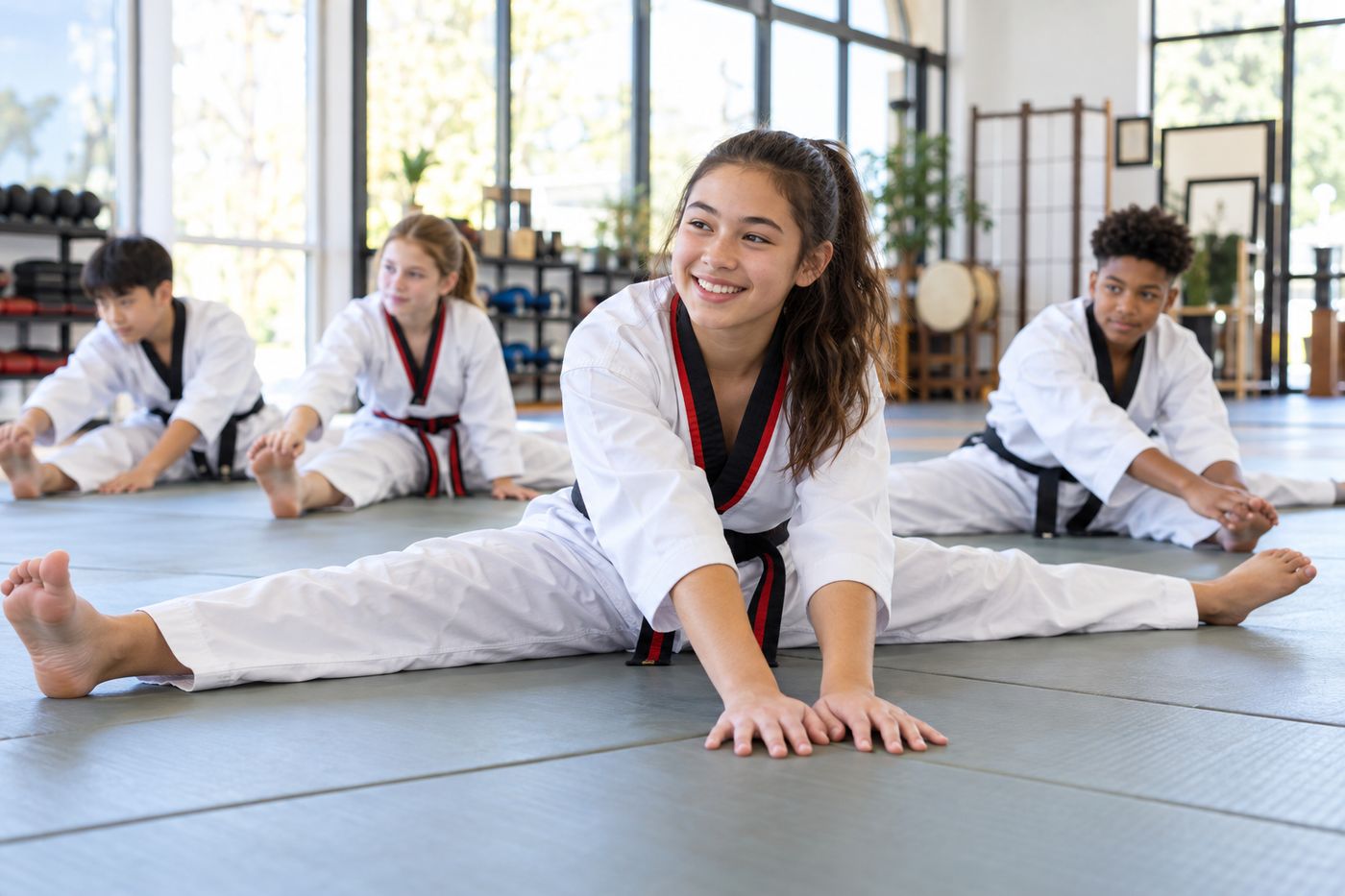
Stretching. Hip openers and hamstring stretches help both kicks. See our guide to kicking higher.
Where they fit in your training
Crescent kicks often appear in warm-ups from white and yellow belt, and are formally taught as kicks a little later. They lead into the axe kick. For every other kick and when it is usually taught, see the kicks guide.
Questions parents and students ask
What is the difference between an inside and outside crescent kick?
Direction. An inside crescent swings the straight leg from outside to inside across the body. An outside crescent swings from inside to outside. Both trace an arc like a crescent moon in front of the body.
Are crescent kicks used in sparring?
Occasionally, to knock an opponent's guard aside or as a setup. They are mostly used in warm-ups and drills to build flexibility and hip control, and as the basis for the axe kick.
What are crescent kicks called in Korean?
Names vary between schools. Many use an chagi (inside kick) and bakkat chagi (outside kick), and some use the Kukkiwon term pyojeok chagi for a related target kick that strikes into the palm.