On this page
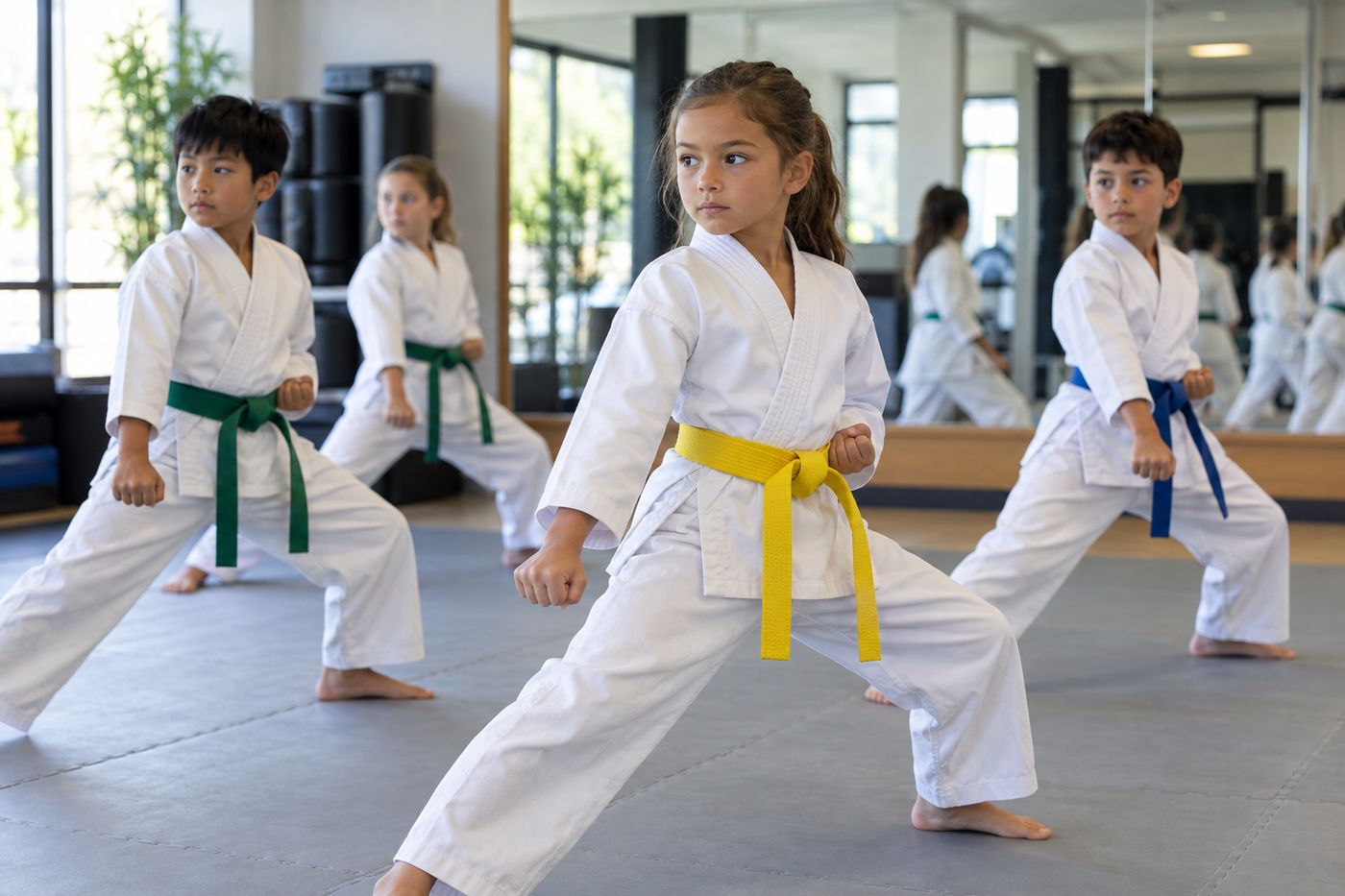
The yellow belt is the first color a student earns, and for most children it is the moment Taekwondo starts to feel like theirs. The awkwardness of the first weeks is gone, the bow comes naturally and the class routine makes sense. Instructors know this, and yellow belt is where they start asking for a little more: more power, more focus and the first real form performed from memory.
What the yellow belt symbolizes
Yellow stands for the earth, the soil in which a seed is planted. In the traditional story of the belts, the white belt was the seed, and yellow is the stage where it goes into the ground and puts down its first roots. Those roots are the basics: the stances, blocks, punches and kicks that the student will keep using at every belt that follows.
The image is a useful one for parents to borrow. Roots grow underground where nobody can see them, and a lot of what happens at yellow belt is the same. Stances get steadier, punches get straighter and the child gets more comfortable in class, even if nothing looks dramatic from the lobby.
The attitude expected at yellow belt
The key word at yellow belt is consistency. A white belt is forgiven for forgetting which foot goes forward. A yellow belt is expected to remember the basics without being reminded, to line up in the right place, and to respond to commands at once.
Instructors also look for the beginning of self-discipline. That means practising the form at home without being asked, keeping hands and feet to yourself in line, and staying focused through a whole class. A loud, confident gihap, the shout that comes with a strong technique, is another thing instructors listen for. Shy children often find their voice at yellow belt, and it is one of the clearest signs of growing confidence.
What a yellow belt learns
Yellow belt builds on white belt rather than replacing it, so the low block, middle punch and front kick stay in every class. On top of those, students usually add:
The middle block (momtong makgi), an inside block that sweeps across the body to protect the chest. It is the key new block in the second form.
The roundhouse kick (dollyeo chagi), which becomes the most used kick in sparring. Yellow belts learn to pivot the standing foot and turn the hip over, kicking with the top of the foot.
Combinations. Simple chains like front kick followed by a punch, or block then counter, performed across the floor.
Taegeuk Ee Jang, the second form. It follows the same floor pattern as the first but uses a front stance on more moves and adds front kicks into punches and high blocks. See our step-by-step guide to Taegeuk Ee Jang, with a move-by-move floor plan.
Partner drills. Many schools introduce three-step or one-step sparring around yellow belt: set responses to a partner’s punch, practised slowly and safely.
What is on the test for the next belt
The test from yellow belt usually looks like a longer version of the first one. Expect a demonstration of basic stances, blocks and kicks in lines across the floor, a review of Taegeuk Il Jang followed by Taegeuk Ee Jang, roundhouse kicks on a pad, Korean counting and commands, and in many schools a simple partner drill. Board breaking is common at this stage, usually a front kick or palm-heel strike through a thin board or a plastic rebreakable board.
What judges want to see is that the forms are performed from memory without pausing, with the correct stances, and that the student knows when to shout. Small mistakes are normal. A student who forgets a move, stops, and calmly starts again is often marked more kindly than one who rushes through.
How long yellow belt takes
Yellow belt usually takes two to four months. In six-color schools it can be longer, because the yellow belt covers two geup ranks and two forms. Students who train twice a week and practise the form at home tend to be ready for testing first.
Tips for parents and students
The most helpful thing a parent can do at yellow belt is ask the child to teach them the form. Explaining a move out loud is one of the fastest ways to remember it, and children love being the expert. Watching a short part of class now and then also helps, because you will see which parts the instructor is correcting.
For students, the jump from first form to second is mostly about stance length. Ee Jang uses more front stances, and keeping them long and low takes leg strength, so practice in short bursts during the week rather than one long session before the test.
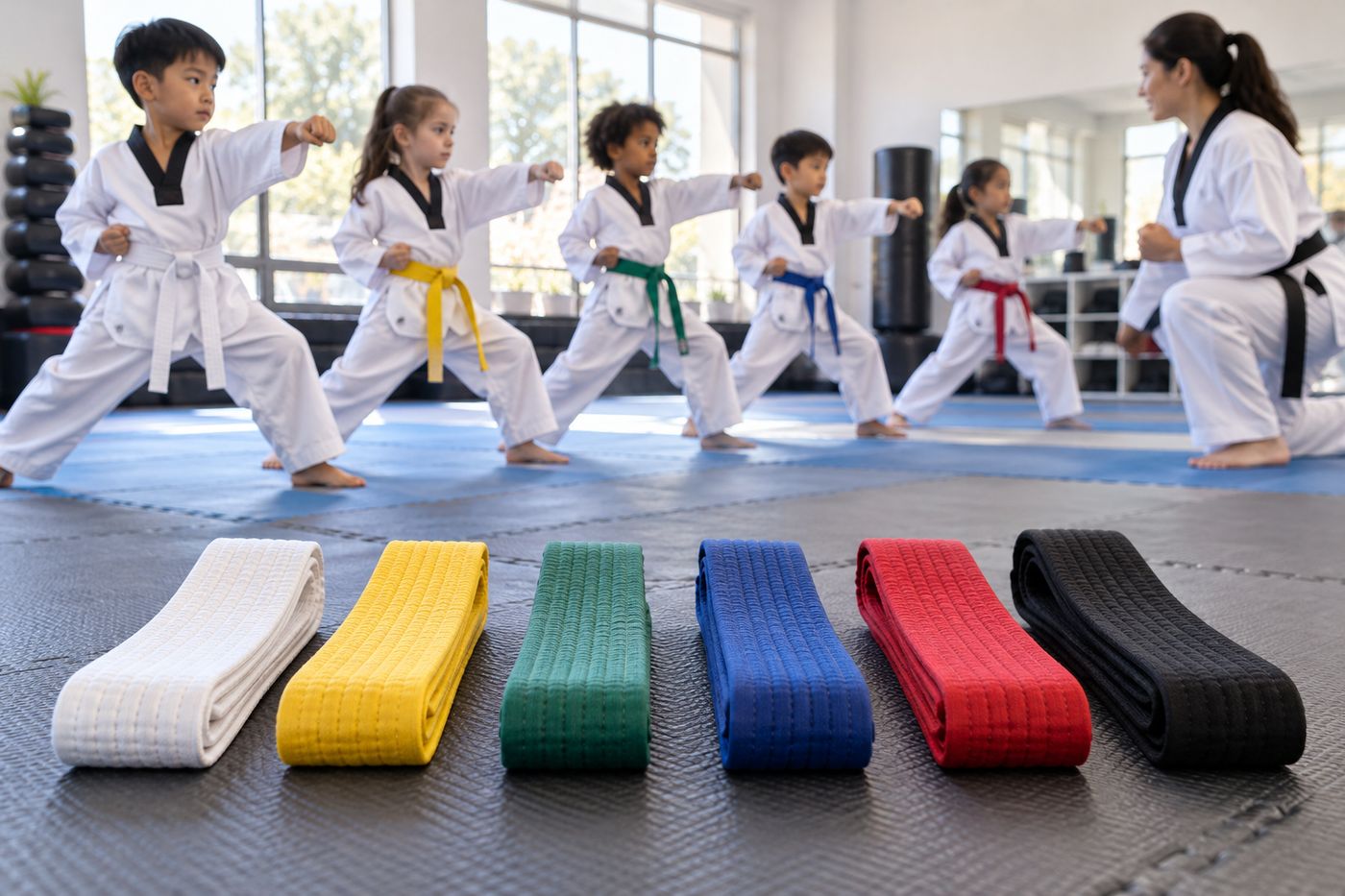
Next comes the orange belt in most US schools, or green in schools that use six colors. For the full rank ladder, see Taekwondo ranks explained.
Questions parents and students ask
What comes after yellow belt in Taekwondo?
In most US schools, orange comes next. In six-color schools, green follows yellow directly, often with a green stripe or a second yellow test in between.
What form do yellow belts learn?
In nine-color schools, yellow belts usually learn Taegeuk Ee Jang (the second form) and test it for orange. In six-color schools, yellow belts often learn both Taegeuk Il Jang and Ee Jang.
What does the yellow belt mean?
Yellow is the earth in which the seed is planted. The student has started putting down roots: the basic stances, blocks and kicks that everything later grows from.