On this page
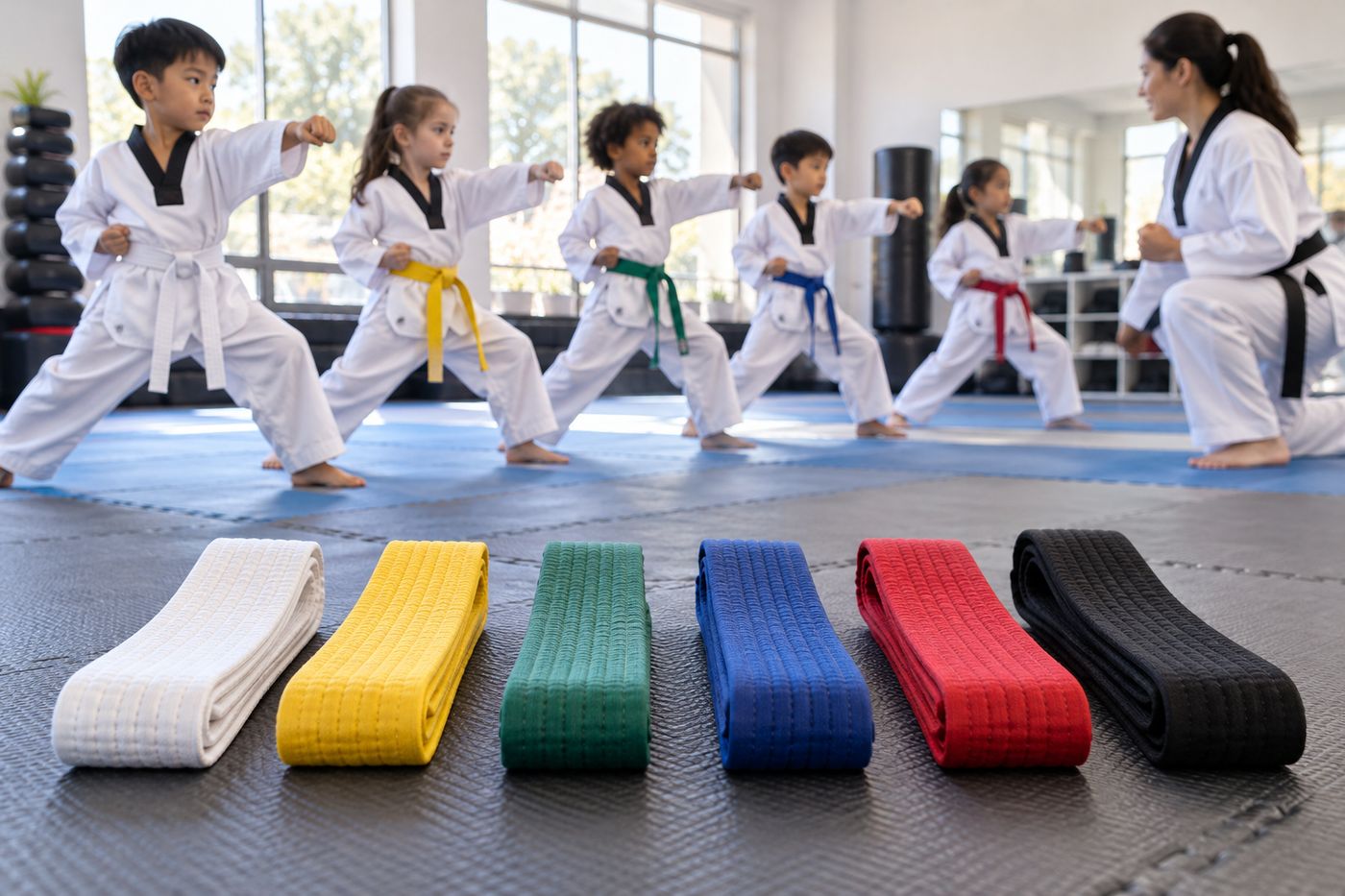
In schools that use it, the brown belt is the first of the advanced color ranks. A brown belt has six forms behind them, spars with confidence and is starting to look like a black belt in the making. Brown is not part of the classic six-color order, and many schools skip straight from blue to red, but in the United States it is a common step, and it carries a clear message: from here, the student is expected to lead as well as learn.
What the brown belt symbolizes
As a school addition, brown has no official meaning, but the usual explanation fits neatly into the story of the belts. If green was the sprout and blue was the plant reaching for the sky, brown is the plant maturing. Its roots are now deep, its stem has turned strong and woody, and it is getting ready to bear fruit. Some schools connect brown with the rich soil of a harvest, the reward of years of steady growth.
The message for the student is maturity. A brown belt is no longer just growing. They are becoming solid, dependable and ready for the final stretch toward black belt.
The attitude expected at brown belt
The quality that defines brown belt is responsibility. Instructors expect brown belts to be role models: on time, in a clean uniform, focused through the whole class and respectful to everyone. Lower belts watch the advanced students closely, and a brown belt who cuts corners teaches the whole class that corners can be cut.
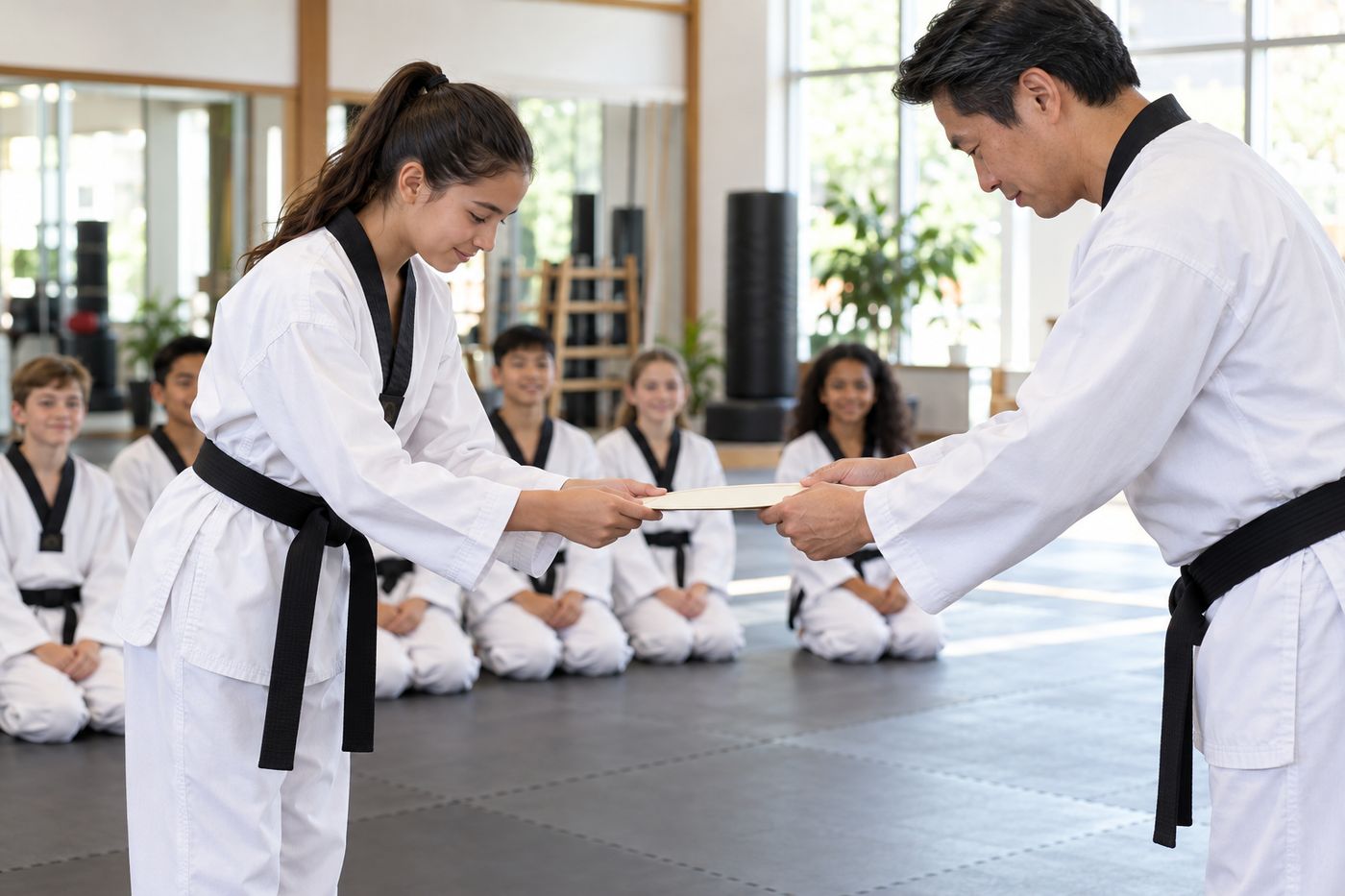
Many schools ask brown belts to start assisting in class. That might mean leading the warm-up, running a line of white belts through their first form, or holding pads and giving feedback. Instructors pay attention to how a brown belt teaches. Patience with a struggling beginner counts for as much as a powerful kick.
What a brown belt learns
Brown belt training pulls everything together and adds advanced techniques:
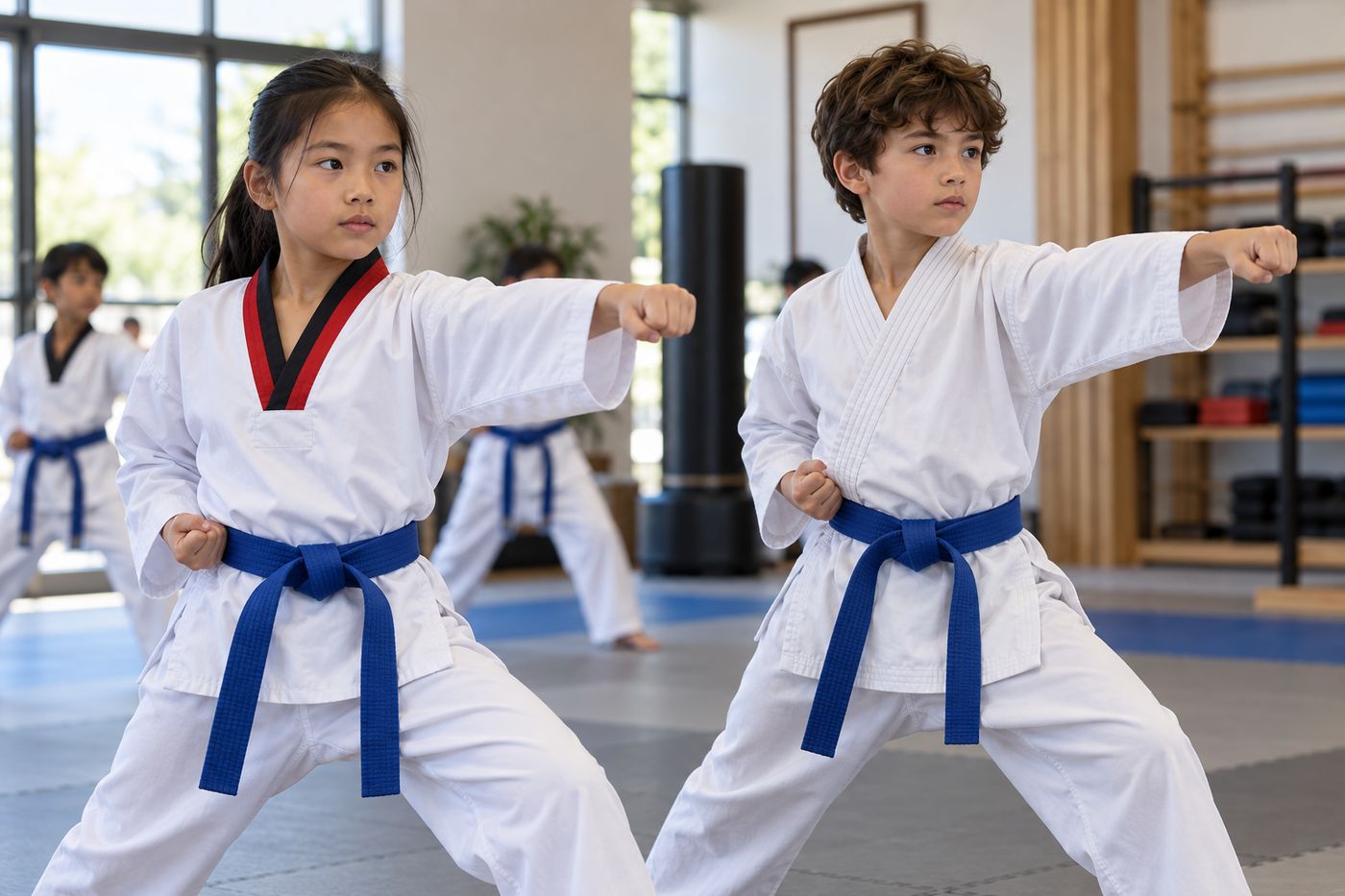
Tiger stance (beom seogi), a short stance with almost all the weight on the back leg and the front foot resting lightly on the ball. It is central to the seventh form.
Horse-riding stance (juchum seogi), a wide, low stance used for side strikes and conditioning.
Close-range techniques such as the knee strike (mureup chigi), backfist and double uppercut, all of which appear in the seventh form.
Jumping kicks, including the jumping front kick and, in many schools, the tornado or 360 kick.
Taegeuk Chil Jang, the seventh form, with tiger stances, a scissors block, a knee strike and a section performed in horse-riding stance. See our step-by-step guide to Taegeuk Chil Jang.
What is on the test for red belt
A typical test from brown belt covers advanced basics and stances, jumping and spinning kicks, a review of all earlier forms with Taegeuk Chil Jang, self-defense techniques, several sparring rounds, and a harder board break, often a jumping or spinning kick or two boards. Some schools add a short written or spoken part, such as explaining the meaning of a form or the tenets of Taekwondo.
Judges look for clear stance changes in the form, especially the tiger stance, which many students make too long. They also look at how the student carries themselves: posture, focus and respect for the panel are part of the score at advanced levels.
How long brown belt takes
Brown belt usually takes three to six months. Schools that put a lot of weight on assisting in class may expect a student to log a certain number of helper hours before testing.
Tips for parents and students
For parents, brown belt is a good time to notice the softer skills. Your child is now learning to lead a group, give feedback kindly and stay calm under pressure in sparring and testing, and those are worth praising as much as the kicks.
For students, the tiger stance rewards slow practice. Stand in it for thirty seconds on each side, checking that the front heel is off the floor and the back knee is bent, and the seventh form will look sharper almost at once.
Next comes the red belt. For how brown fits into the full ladder of ranks, see Taekwondo ranks explained.
Questions parents and students ask
Does Taekwondo have a brown belt?
Many US schools do. The Kukkiwon only certifies black belt ranks, so schools choose their own color belts, and brown is a common addition between blue and red. Six-color schools and most schools in Korea do not use brown.
What does the brown belt mean?
Schools that use brown usually describe it as the plant maturing: its roots are deep, its stem is strong and it is getting ready to bear fruit. It marks the start of the advanced color ranks. The meaning is a school tradition rather than an official one.
Is brown belt higher than blue in Taekwondo?
In most US nine-color schools, yes: brown comes after blue and before red. A few schools place brown differently, so the curriculum sheet is the final word.