On this page
A hard kick in Taekwondo is not mostly about strong legs. It is about getting the weight of the whole body moving in one direction, very fast, and stopping it inside the target rather than at the surface. That is why a slim twelve-year-old with good technique can break a board that a much bigger beginner cannot. This guide covers where kicking power comes from, the technique fixes that add the most, and the strength and speed work that builds on them.
Where kicking power comes from
Physics gives a simple answer: force depends on mass and acceleration. In a kick, the mass is not just the leg. When the hip turns into the kick and the body leans behind it, more of your body weight goes into the target. The acceleration comes from speed: a quick, relaxed leg that snaps at the end hits much harder than a slow, tense one. So the two big levers are hip and speed. Raw leg strength matters, but less than most people think.
Technique fixes that add the most power
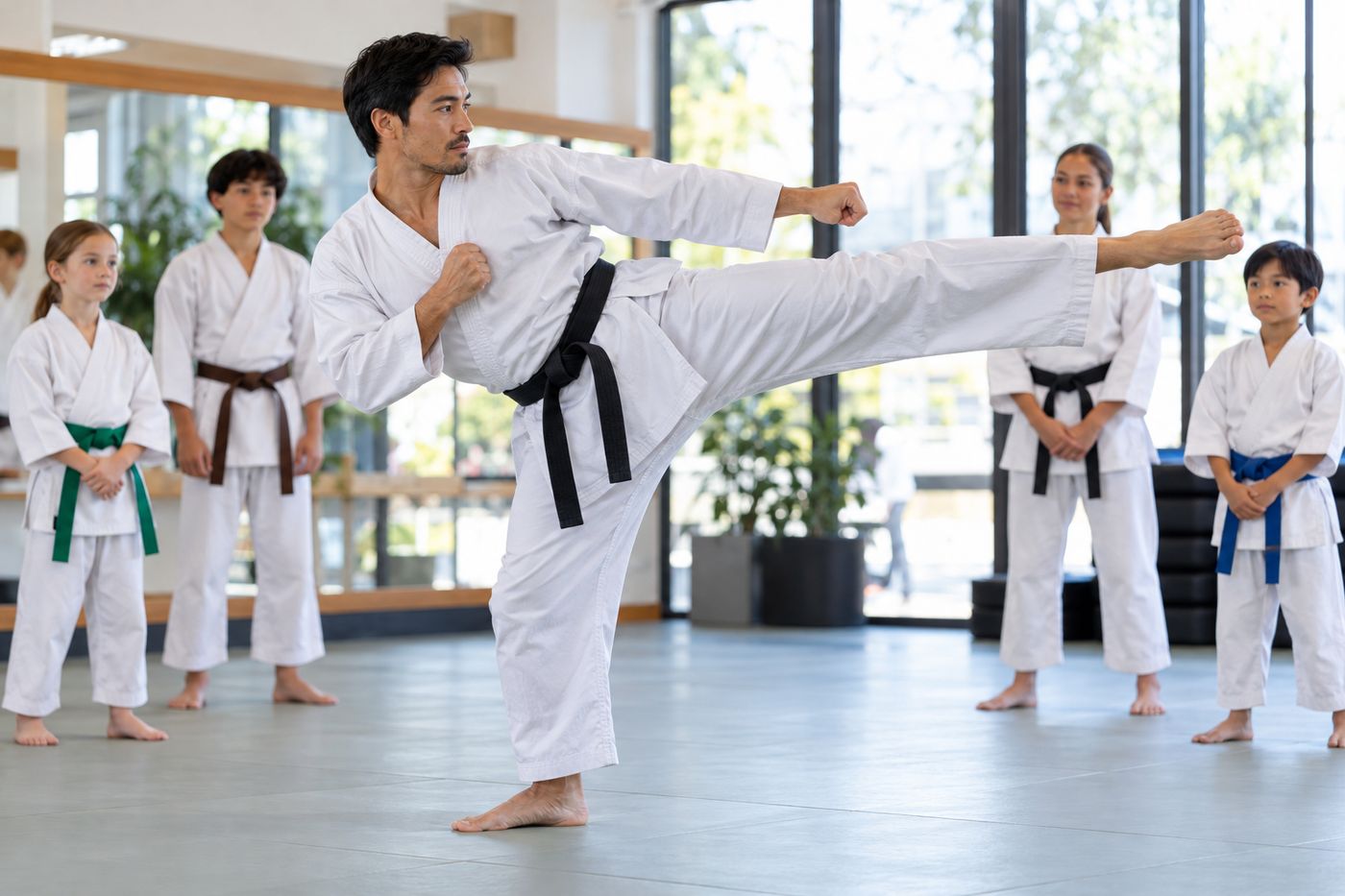
Turn the hip. In roundhouse, side and back kicks, the hip should turn fully into the kick. A hip that stays square sends the power off to the side. See the roundhouse and side kick guides for the details.
Pivot the standing foot. If the standing foot does not turn, the hip cannot either. A fast pivot is often the single biggest power fix for intermediate students.
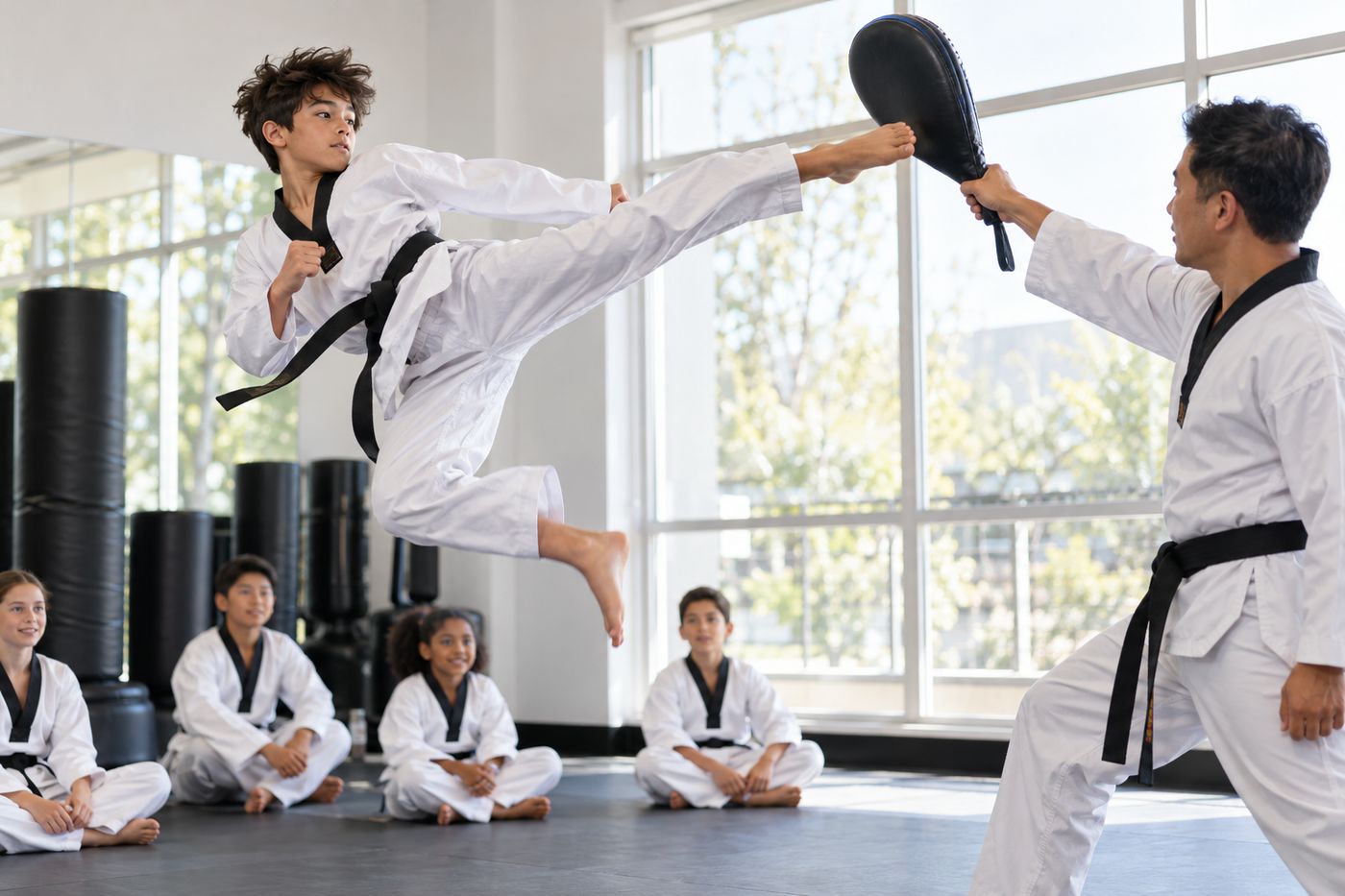
Kick through the target. Aim a few inches behind the surface of the pad or board, not at it. Kicks that stop at the surface lose most of their force.
Stay relaxed until impact. Tense muscles slow the leg down. Keep the leg loose on the way out and tighten only at the moment of contact, with a sharp breath out or a gihap.
Use the right striking surface. Heel for side and back kicks, ball of the foot for front kicks, top of the foot for the roundhouse in sparring. The wrong surface hurts the foot and wastes power.
Strength that helps
Strength training supports good technique; it does not replace it. For teens and adults, two short sessions a week of squats, lunges, glute bridges and planks build the legs, hips and core that drive kicks. Single-leg exercises such as step-ups and single-leg deadlifts are especially useful, because every kick is thrown standing on one leg. Children do best with body-weight exercises and jumping games rather than weights.
Speed drills
Fast kicks on a pad. Ten quick roundhouses in a row without putting the foot down, focusing on snap rather than force.
Reaction kicks. Have a partner flash a pad at different heights and kick it as fast as possible when it appears. This builds the speed that matters in sparring.
Skipping rope. A few minutes of rope work builds the quick feet and calves that make kicks faster.
Explosive jumps. Squat jumps and tuck jumps, five to eight at a time, build the explosive power behind jumping kicks.
How to test your progress
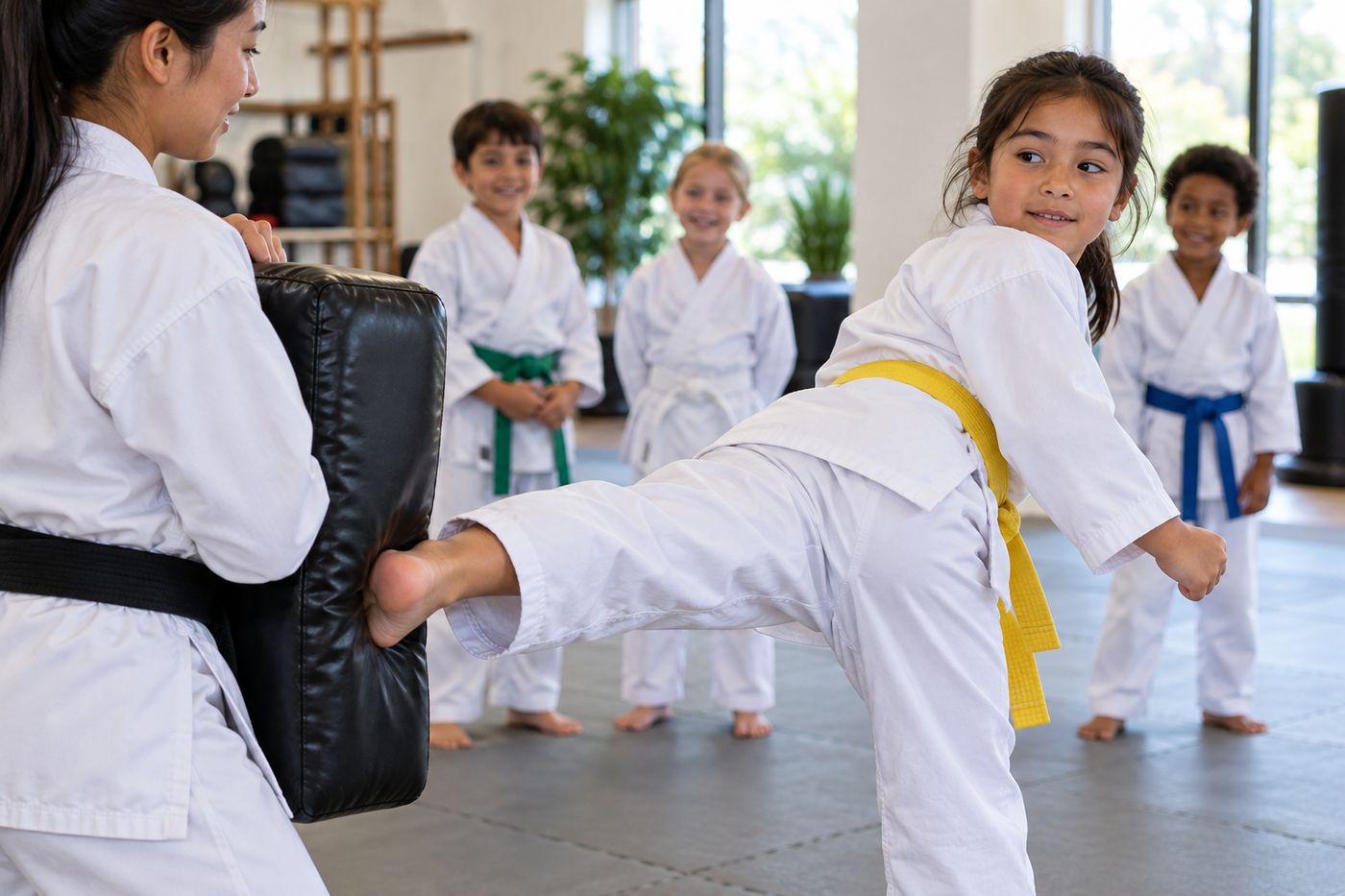
The simplest test is the sound on a kicking pad held firmly by a partner: a sharp crack means a fast kick that went through. Your instructor may also use breaking boards, which give clear feedback. Board breaking should only be done with proper boards and supervision. For more about breaking at belt tests, see our guide to the Taekwondo belt test.
For flexibility to go with your power, see how to kick higher, and for technique on each kick, the guide to Taekwondo kicks.
Questions parents and students ask
Does lifting weights make Taekwondo kicks stronger?
It can help, especially exercises that build the legs, hips and core like squats, lunges and deadlifts. But technique and speed matter more. A fast, well-aimed kick with the hips behind it beats a slow kick from strong legs.
Why do my kicks feel weak on the pad?
Usually because the hip is not turning into the kick, the kick stops at the surface instead of going through, or the standing foot is not pivoting. Fixing those three often doubles the sound on the pad.
How can kids kick harder safely?
Through technique, speed and body-weight exercises like squats and jumping games. Children do not need heavy weights to develop strong kicks.