On this page
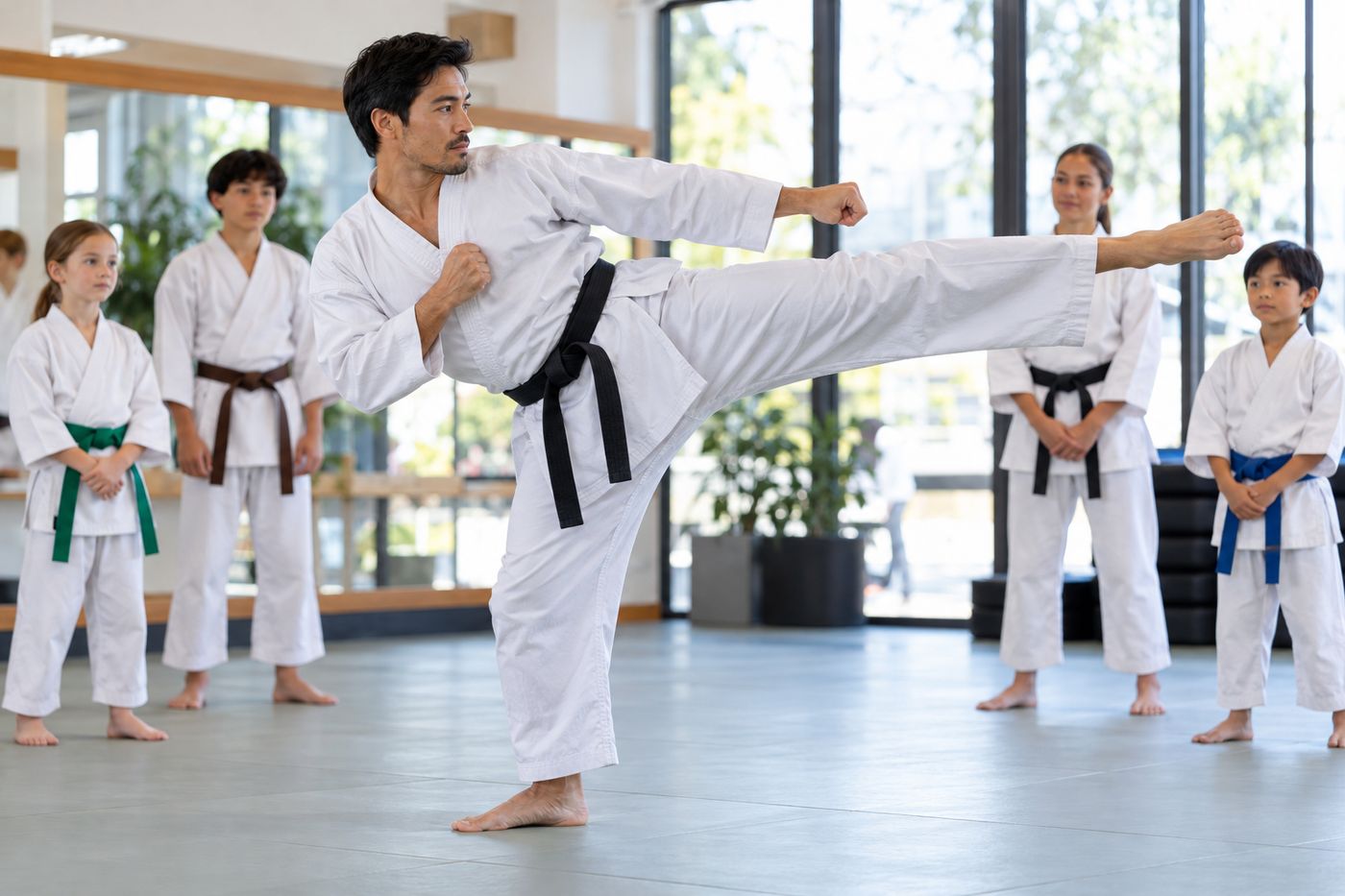
The twist kick, biteureo chagi (비틀어차기), is one of the less famous basic kicks in Taekwondo, but it is part of the standard Kukkiwon kicking curriculum and turns up regularly in advanced classes and black belt tests. It does something no other basic kick does: it strikes outward, to the side opposite the kicking leg. If a right roundhouse kick hooks in from the right, a right twist kick snaps out toward the right-front from the inside. Learning it builds hip mobility in a direction most training ignores.
What the twist kick is used for
The twist kick attacks a target that is in front of you but slightly to the side of your kicking leg’s opposite hip, such as an opponent who has moved off your center line. It usually strikes with the ball of the foot. In practice, it is mainly a training kick: it develops hip rotation and control, and examiners sometimes ask for it to see how complete a student’s kicking is.
How to do a twist kick, step by step
- Start in a fighting stance or a front stance, guard up.
- Lift the kicking knee up in front of you and slightly across your body, as if starting a front kick aimed toward the opposite side.
- Turn the hip inward, the opposite direction to a roundhouse, so the knee points out at an angle and the lower leg is ready to snap outward.
- Snap the lower leg out at an angle, striking with the ball of the foot, toes pulled back.
- Pull the lower leg back to the chamber and set the foot down.
The standing foot pivots only slightly, much less than in a roundhouse. The twist happens in the hip of the kicking leg.
Common mistakes
Turning it into a front kick is the most common error. If the hip does not turn inward, the kick just goes straight. The knee should point out to the angle you are kicking toward.
The second is swinging the leg straight like a crescent kick. Chamber the knee first and snap from the knee. Third, students often point the toes and strike with the top of the foot, which is weak on this angle. Pull the toes back and use the ball of the foot. Last, a low chamber makes the kick hit low. Lift the knee to the target height first.
Drills to practise at home
Chamber and turn. Lift the knee and turn the hip inward without kicking, holding for three seconds. Ten on each leg.
Slow kicks against a wall. Stand at an angle to a wall and slowly extend the twist kick toward it, checking that the ball of the foot leads.
Hip mobility. Hip rotations and figure-four stretches help the inward turn. See our guide to kicking higher.
Kick pairs. Practise a roundhouse followed by a twist kick with the same leg, to feel the hip turning both ways.
Where it fits in your training
Schools that teach the full Kukkiwon kicking set usually introduce the twist kick around blue belt or later. It pairs naturally with the roundhouse kick. For every other kick, see our guide to Taekwondo kicks.
Questions parents and students ask
What is a twist kick in Taekwondo?
A kick that travels outward, away from the body's center, to strike a target on the opposite side from a roundhouse. It looks like a roundhouse in reverse and usually strikes with the ball of the foot.
Is the twist kick the same as an outside crescent kick?
No. A crescent kick swings a straight leg in an arc. A twist kick chambers the knee and snaps the lower leg out at an angle, turning the hip inward the opposite way to a roundhouse.
Is the twist kick used in sparring?
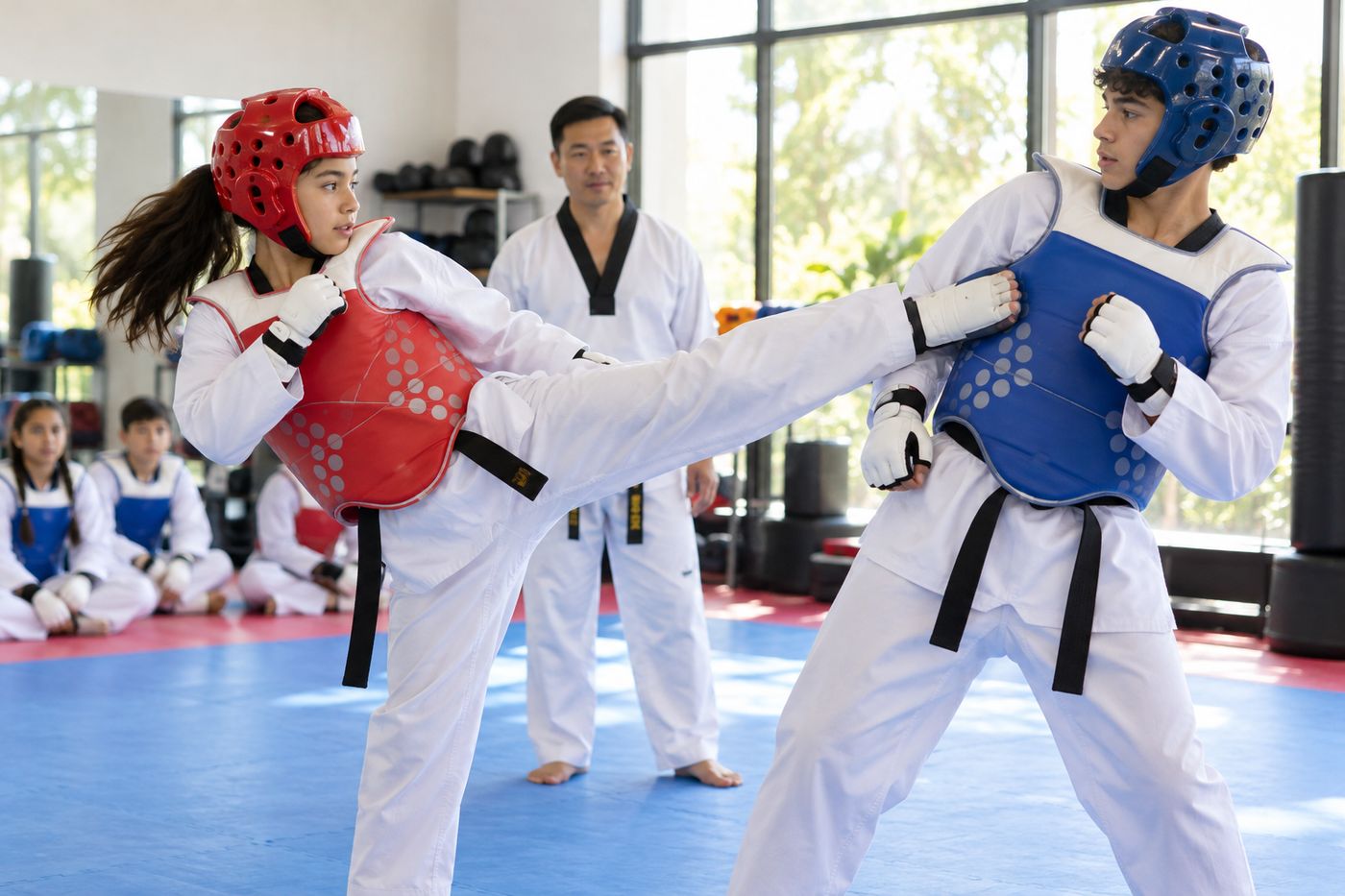
Rarely in modern Olympic sparring. It is mostly practised as a basic kick in the Kukkiwon curriculum, because it builds hip flexibility and control in a direction other kicks do not train.