| Taekwondo | Karate | |
|---|---|---|
| Main focus | Kicks, especially high and spinning kicks | Balanced punches, kicks, blocks and stances |
| Forms | Poomsae (Taegeuk series, then black belt forms) | Kata, different for each karate style |
| Sparring | Padded vest and head guard, kicks score most | Mostly point-based, light contact; some styles full contact |
| Belt pace | New belt every 2 to 4 months at many schools | Often slower, fewer belt colors |
| Junior black belt | About 3 to 5 years | About 3 to 5 years |
| Olympic sport | Yes, since 2000 | Only at Tokyo 2020 |
| Typical cost | About $100 to $250 a month | About $100 to $250 a month; small clubs can be cheaper |
| Class feel | Busy, energetic, lots of kids | Quieter and more traditional at many dojos |
Pick by goal
- Loves to jump and kickTaekwondoKicking is the heart of every class.
- Needs calm structureKarateTraditional dojos are quieter and stricter.
- Wants frequent rewardsTaekwondoBelts usually come faster.
- Wants Olympic competitionTaekwondoIt is a permanent Olympic sport.
On this page
Karate and Taekwondo are the two styles most American parents choose between first, usually because there is one of each within a short drive. From the lobby window they can look almost identical: white uniforms, colored belts, children bowing and shouting in unison. Underneath, they are different arts with different priorities, and those differences matter more for some children than others.
This guide walks through the real differences, from technique to sparring to cost, and ends with a simple way to decide. For the wider picture, including the grappling arts, see our comparison of all the main styles.
Where they come from
Karate developed on the island of Okinawa and spread through mainland Japan in the early twentieth century. Today it exists as several distinct styles, the best known being Shotokan, Goju-ryu, Shito-ryu, Wado-ryu and the full-contact Kyokushin, each with its own forms and emphasis.
Taekwondo was formed in Korea in the 1940s and 1950s. Some of its founders had studied karate in Japan, which is why the two still share features such as forms, belts and the straight punch. But Taekwondo quickly developed its own identity built around kicking, and it became an Olympic sport in 2000. Most schools in the US teach the Olympic-style curriculum of the Kukkiwon and World Taekwondo, while others follow the ITF or the ATA, which use different forms.
Kicks vs hands
The biggest practical difference is where the techniques come from. Taekwondo is a kicking art. Children spend a large share of every class kicking: front kicks, roundhouse kicks, side kicks and, as they advance, spinning and jumping kicks. High kicks are celebrated, and flexibility is trained constantly.
Karate is more balanced between hands and feet, and in most styles the hands come first. Kicks are generally lower and more compact, and there is more emphasis on strong stances, punches, strikes and blocks. For a child who loves to jump and kick, Taekwondo is usually more fun. For a child who is less flexible or prefers precise, grounded movement, karate may feel more natural.

Forms: kata and poomsae
Both arts teach forms, set routines performed alone against imaginary opponents. In karate they are called kata, and in Taekwondo poomsae. Karate kata tend to be lower, with deep stances and many hand techniques, and some styles have a large number of them. Kukkiwon Taekwondo has eight color-belt forms, the Taegeuk series, followed by nine black belt forms.
Forms matter for parents for two reasons. They are a big part of every belt test, so your child will practise them at home, and they are where a lot of the discipline and focus that parents value is built. Children who enjoy memorising routines, a bit like dance or gymnastics, often love this side of either art.
Sparring and competition
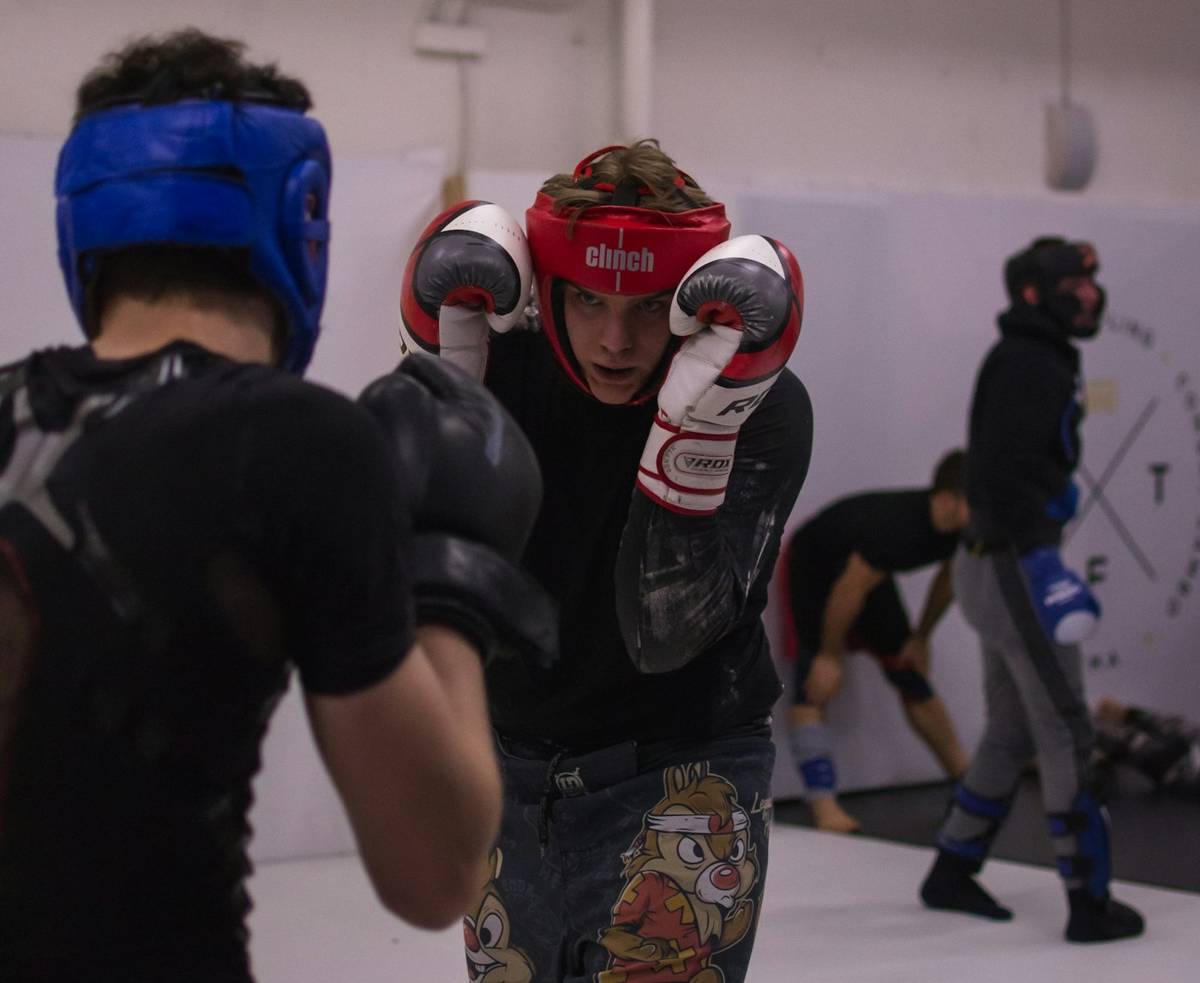
This is where the two styles feel most different. Olympic Taekwondo sparring is a fast, kick-heavy sport. Competitors wear a padded vest (often with electronic sensors), a helmet, forearm and shin guards and a mouthguard, and score points mainly with kicks to the body and head. Punches score only to the body. Children’s divisions have rules to protect younger competitors, but head kicks are part of the game from fairly early.
Karate sparring (kumite) in most children’s programs is point-based and light-contact. In World Karate Federation rules, competitors score with controlled punches and kicks that stop short of or lightly touch the target, and excessive contact is penalised. Full-contact styles such as Kyokushin are the exception: they allow hard body strikes and kicks, though not punches to the head. Ask any school which kind of sparring it does and at what age contact begins.
At the top level, Taekwondo is a permanent Olympic sport. Karate appeared at the Tokyo 2020 Games but was not kept for Paris 2024 or Los Angeles 2028, though it remains a major world sport with large youth tournaments.
Belts and progress
Both styles use colored belts, and both vary from school to school. A typical Taekwondo school has around eight to ten color belts and tests every two to four months, so children get a new goal often. Karate belt systems are similar in shape, often with ten levels called kyu below black belt, though some traditional dojos test less often. In both arts, a good school takes roughly three to five years to bring a child to a junior black belt. Our Taekwondo belt order guide explains how one full system works.
Class culture
Taekwondo schools in the US are often busy, energetic places with large kids’ programs, after-school pickup, birthday parties and summer camps. That can be wonderful for working families. It can also mean a stronger sales culture, with long contracts and frequent fees, so read the fine print.
Karate dojos range from similar commercial schools to small traditional clubs run by one sensei, sometimes in a community center. Traditional dojos tend to be quieter, stricter about etiquette and slower to promote. Neither culture is better; the question is which one your child, and your family’s schedule, will thrive in.
Cost
Prices for both are similar in the same city, commonly somewhere between about $100 and $250 a month at commercial schools, with testing fees, uniforms and sparring gear extra. Taekwondo sparring gear (vest, helmet, guards) is a slightly bigger one-time cost. Traditional karate clubs and community programs can be much cheaper. See martial arts cost by style for the usual add-ons.
Which one should your child choose?
Choose Taekwondo if your child is energetic, flexible or simply loves kicking, enjoys frequent goals and rewards, or dreams of Olympic-style competition. Choose karate if your child responds well to calm structure and tradition, would rather use their hands, or would benefit from a quieter dojo. If your child is being bullied and self-defense is the priority, look at Taekwondo vs BJJ and karate vs BJJ as well, because grappling arts approach self-defense very differently.
Then book a trial class at both. Watch whether the instructor knows the children’s names, keeps them moving, and corrects them kindly. Your child’s grin, or lack of it, on the drive home will tell you more than any comparison chart.
Questions parents and students ask
Is karate or Taekwondo better for kids?
Neither is better for every child. Taekwondo suits energetic, flexible kids who love kicking and like frequent belt goals. Karate suits children who respond to calm, traditional structure and benefits kids who prefer using their hands. The school matters more than the style.
Is Taekwondo easier than karate?
Not really. Taekwondo's high kicks demand more flexibility and balance, while karate demands more precise hand technique and stances. Both take roughly three to five years of steady training to reach a junior black belt at a good school.
Can my child switch from karate to Taekwondo later?
Yes. Stances, balance, discipline and basic blocks carry over well. Your child will need to learn new forms and the different sparring rules, and most schools start transfer students at a lower belt and promote them quickly once they show their skills.