Pick by goal
- Nervous childWatch a class firstSeeing it removes most of the fear.
- What to wearT-shirt and soft trousersNo zips, buttons or jewelry.
- What to bringWater and a hair tieMost schools lend anything else.
- Where to sitThe parents' areaLet the instructor lead your child.
On this page
A first karate class can feel like a big step for a child, and for a parent watching from the side. Knowing what will happen makes it much easier for both of you. Every dojo has its own routine, but most children’s classes follow a similar pattern.
Before you go
Most schools offer a free or low-cost first class; book it in advance and ask which class suits your child’s age. Talk to your child about what they will do, and if possible watch a class together first. Dress your child in a T-shirt and soft trousers or shorts with no zips, buttons or jewelry. Karate is done barefoot, so bring sandals or easy shoes for the walk to the mat. Tie long hair back and bring a water bottle. Arrive ten minutes early so there is time to fill in a form, use the bathroom and meet the instructor, who is usually called sensei.
Bowing in
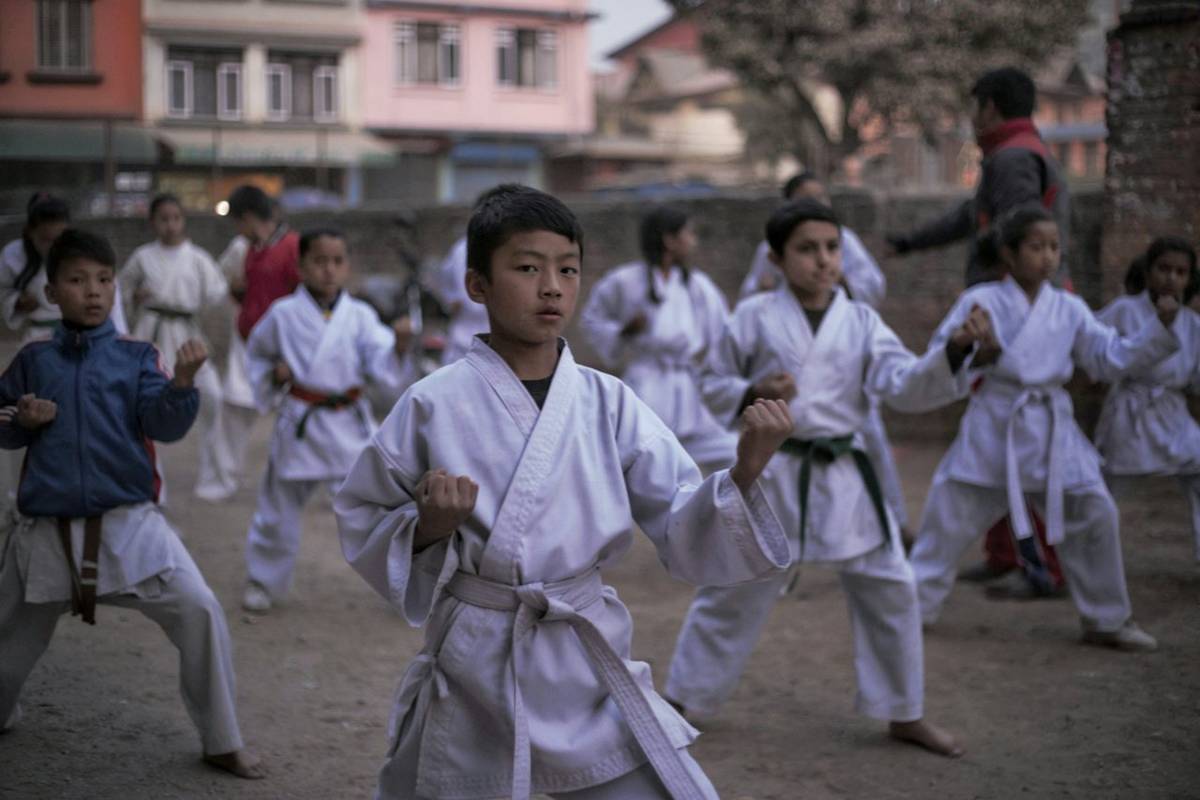
Class usually starts with children lining up, often by belt rank, with beginners at the end. The instructor calls the class to attention, and everyone bows to the front of the room and to the instructor. Some schools kneel for a moment of quiet first. Your child will be shown what to do, so there is no need to practise beforehand. Our guide to karate words explains what the Japanese commands mean.
Warm-up and basics
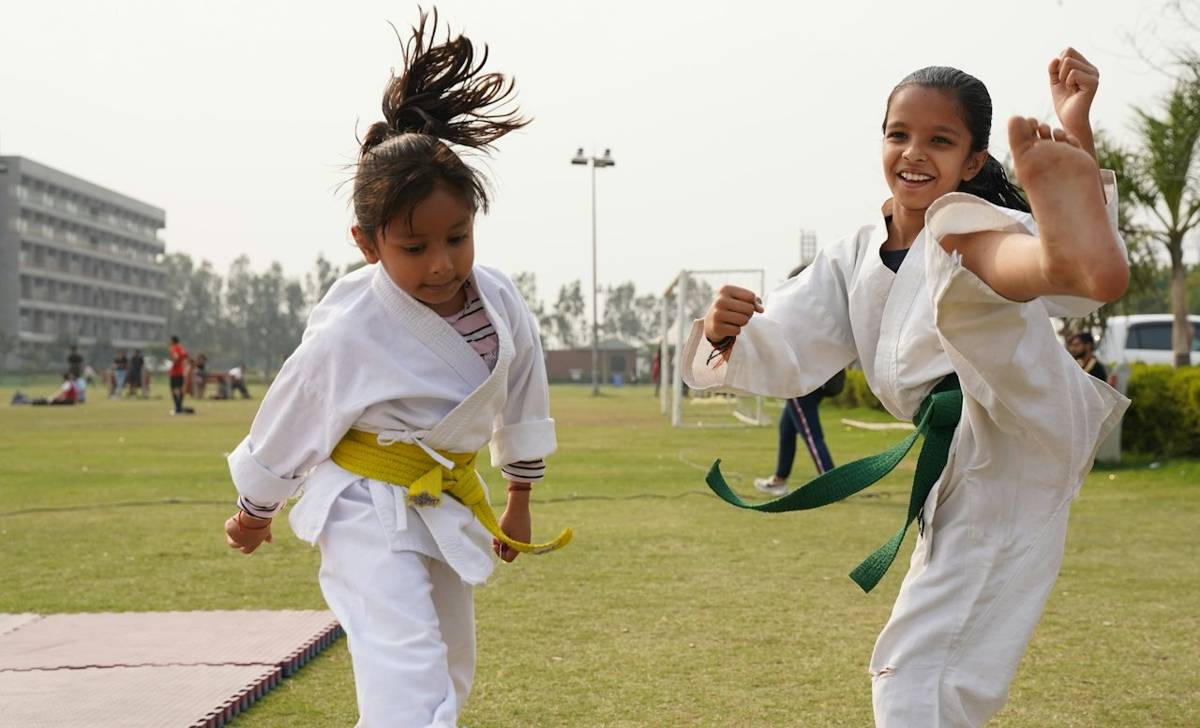
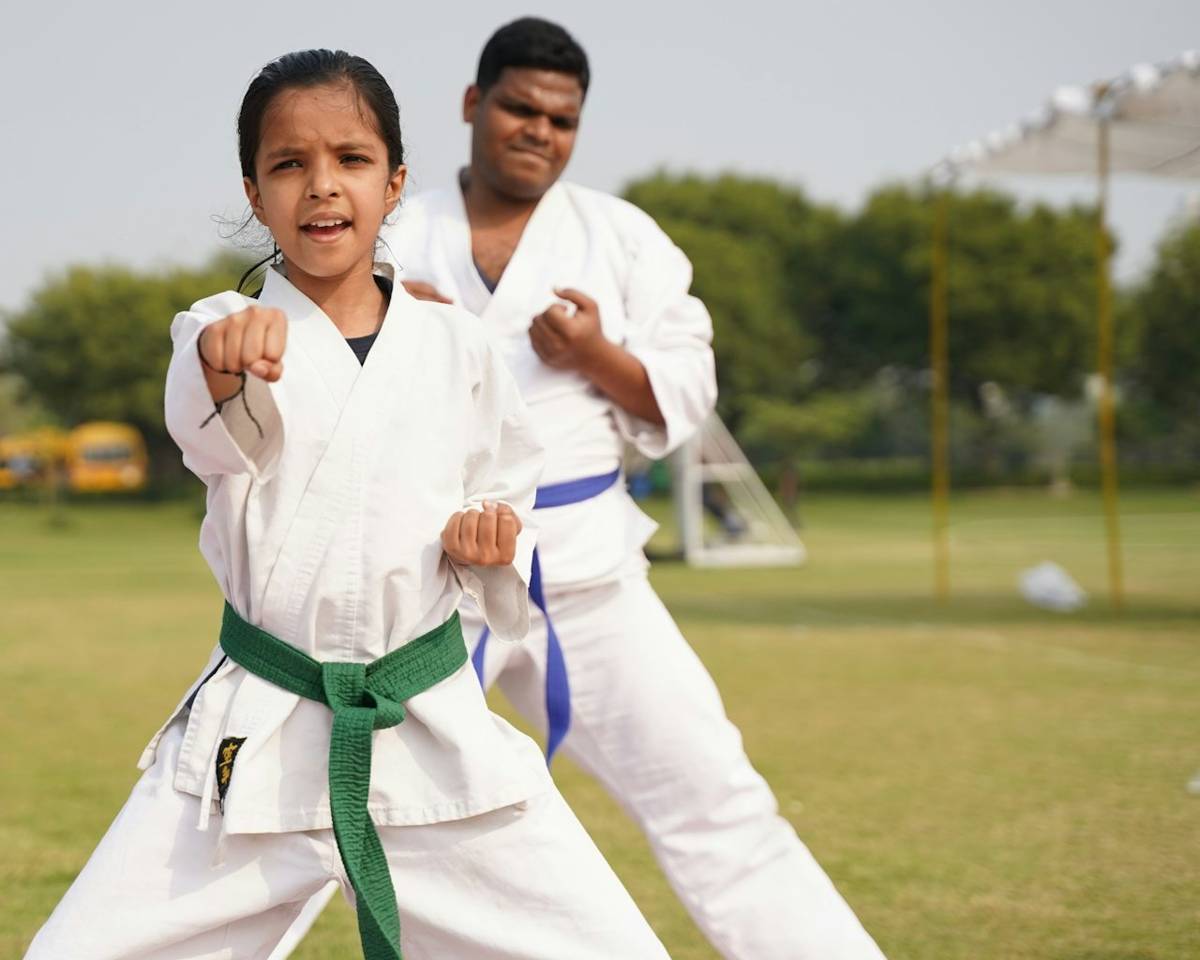
A warm-up of jogging, jumping, stretching and simple games gets everyone moving. Then come the basics, called kihon: stances, straight punches, simple blocks and front kicks, practised in lines on the instructor’s count. A new student is often given a helper or placed near the front so the instructor can guide them. Children shout a kiai, a short sharp yell, on certain moves, which most kids love once they get over the surprise.
Kata, pads and games
Depending on the school, the rest of the class may include practising kata (set routines), hitting pads with a partner, and games that build reflexes and balance. A first-timer will usually learn the first few moves of a beginner kata or simply follow along. There is no sparring in a first class. Our guide to beginner karate kata shows what comes first in the main styles.
Bowing out
Class ends as it began, lined up and bowing. Some schools recite a short creed or dojo rules. Afterward, the instructor will often talk to you about how it went and explain the next steps.
Etiquette for children and parents
Children should bow when they step on and off the mat, listen when the instructor speaks, and answer politely. Parents should keep voices low in the viewing area, put phones on silent and avoid coaching from the side; it confuses children when two adults give instructions. Our dojo etiquette guide for parents covers more.
Helping a nervous child
If your child freezes or cries, that is very common. Let them watch from the side, sit with them if the school allows, and try again next time without pressure. Praise them for coming at all. Most nervous children are on the mat by the second or third visit. Our guide to shy children in martial arts has more ideas.
After the class
Ask your child what they liked best, not whether they were good at it. Before signing up, take the price list and contract home, and use our trial class checklist to compare schools.
Questions parents and students ask
What does a child wear to a first karate class?
Comfortable athletic clothes such as a T-shirt and soft trousers or shorts, with no zips, buttons or jewelry. Karate is practised barefoot. Long hair should be tied back. A uniform is not needed until your child joins.
How long is a kids karate class?
Usually 30 to 45 minutes for young children and 45 to 60 minutes for older ones. Preschool classes are often 30 minutes.
What if my child cries or won't join in?
It happens often. Let them watch from the side, sit with them if needed, and try again next time. Good instructors invite children in gently and never force them.