On this page
Choosing a Taekwondo school can feel like guesswork. Most towns have several, the websites all promise confidence and discipline, and the prices and contracts vary wildly. The good news is that a few clear questions and one trial class usually tell you everything you need. This guide walks through what matters most, what to watch for during a visit, and the questions to ask before you sign anything.
Start with the style and affiliation
Taekwondo comes in a few main styles, and it helps to know which one a school teaches. Most schools in the United States teach Olympic-style Taekwondo, governed by World Taekwondo and the Kukkiwon in Seoul. They use the Taegeuk forms and their black belts can be registered with the Kukkiwon, which is recognized worldwide. Others teach ITF Taekwondo, with different patterns and a different sparring style, or belong to the ATA, the American Taekwondo Association, which runs its own system.
None of these is wrong, but they are different, and switching between them later means relearning forms. Ask the school which style it teaches and which organization issues its black belt certificates. If you want the option of Olympic-style competition, look for a school affiliated with the Kukkiwon and, for tournaments, with USA Taekwondo, the national governing body.
Look at the instructors
The quality of a school is mostly the quality of its instructors. Ask what rank the head instructor holds and whether they have a Kukkiwon master instructor certificate or equivalent. Ask who actually teaches your child’s class, because in busy schools it may be an assistant. Assistants are normal and often excellent, but they should be supervised by a senior instructor on the floor.
Good instructors know students’ names, correct technique individually rather than only shouting counts, and keep the class moving. Watch how they handle a child who is struggling or misbehaving. Firm and kind is what you want. Humiliation or constant yelling is not.
Watch a real class
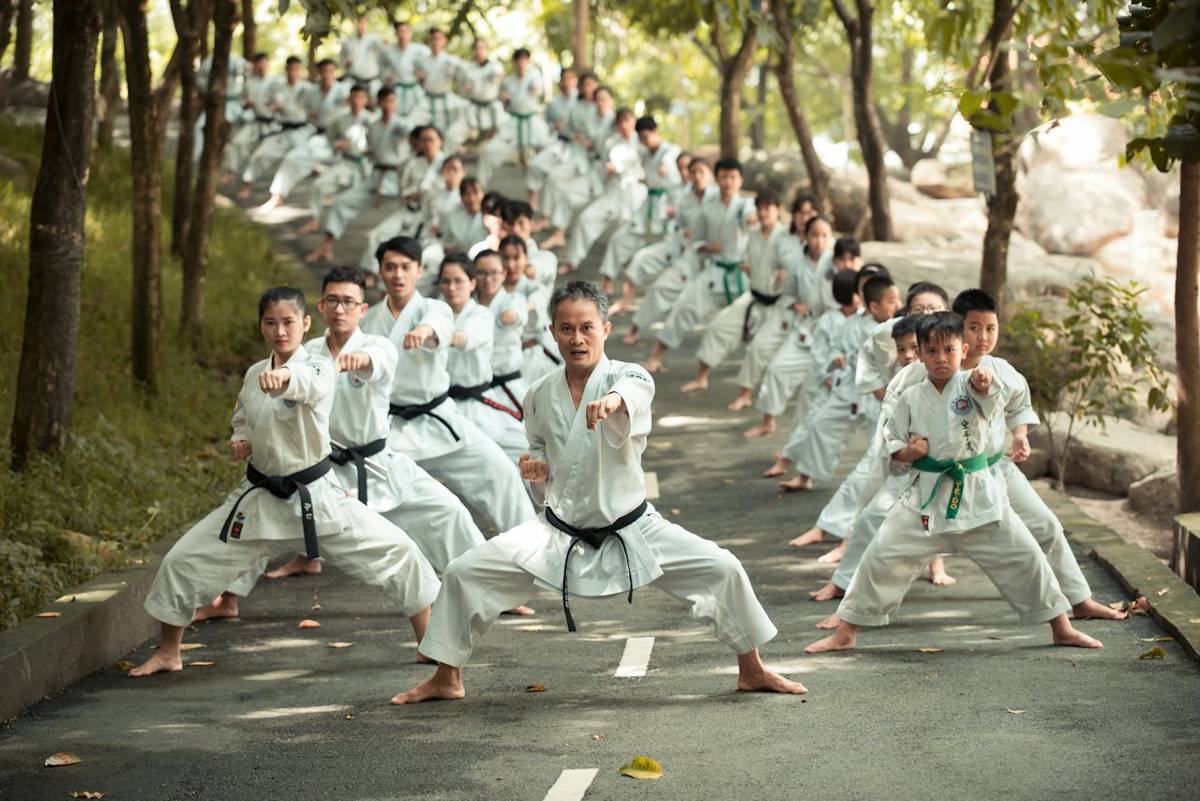
Always watch a regular class before signing up, not just a demonstration or a free introductory lesson. Look at the class size: one instructor for more than about fifteen young children is hard to manage well. Look at how much time is spent actually training versus waiting in line. Check that the mats are in good condition and that sparring, if there is any, uses proper protective gear.
Pay attention to the older students too. If the advanced students look sharp, respectful and engaged, the school is doing something right. If the black belts look sloppy or bored, that is where your child will end up.
Understand the belt pace
Ask how often belt tests happen, what they cost, and roughly how long it takes to reach black belt. Most good schools test every two to four months and expect black belt in three to five years of steady training. Very fast promotion, especially black belt in a year or less, can be a sign that belts are being used mainly as a sales tool. Very slow promotion without clear requirements can be discouraging for children. The ideal is a school with a written curriculum showing what each belt requires. Our guide to Taekwondo ranks explains how a healthy rank system works.
Read the contract carefully
Contracts are where many parents run into trouble. Schools often offer the best price for a 12-month agreement or a “black belt program” paid over several years. These can be good value if your child sticks with it, but children’s interests change. Before signing, ask whether there is a trial month, whether month-to-month is available, what happens if you move or your child is injured, and how cancellation works. Get the answers in writing. Also ask about extra costs: testing fees, uniform and gear, and tournament or seminar fees. Our guide to what Taekwondo costs lists the usual expenses.
Questions to ask on your visit
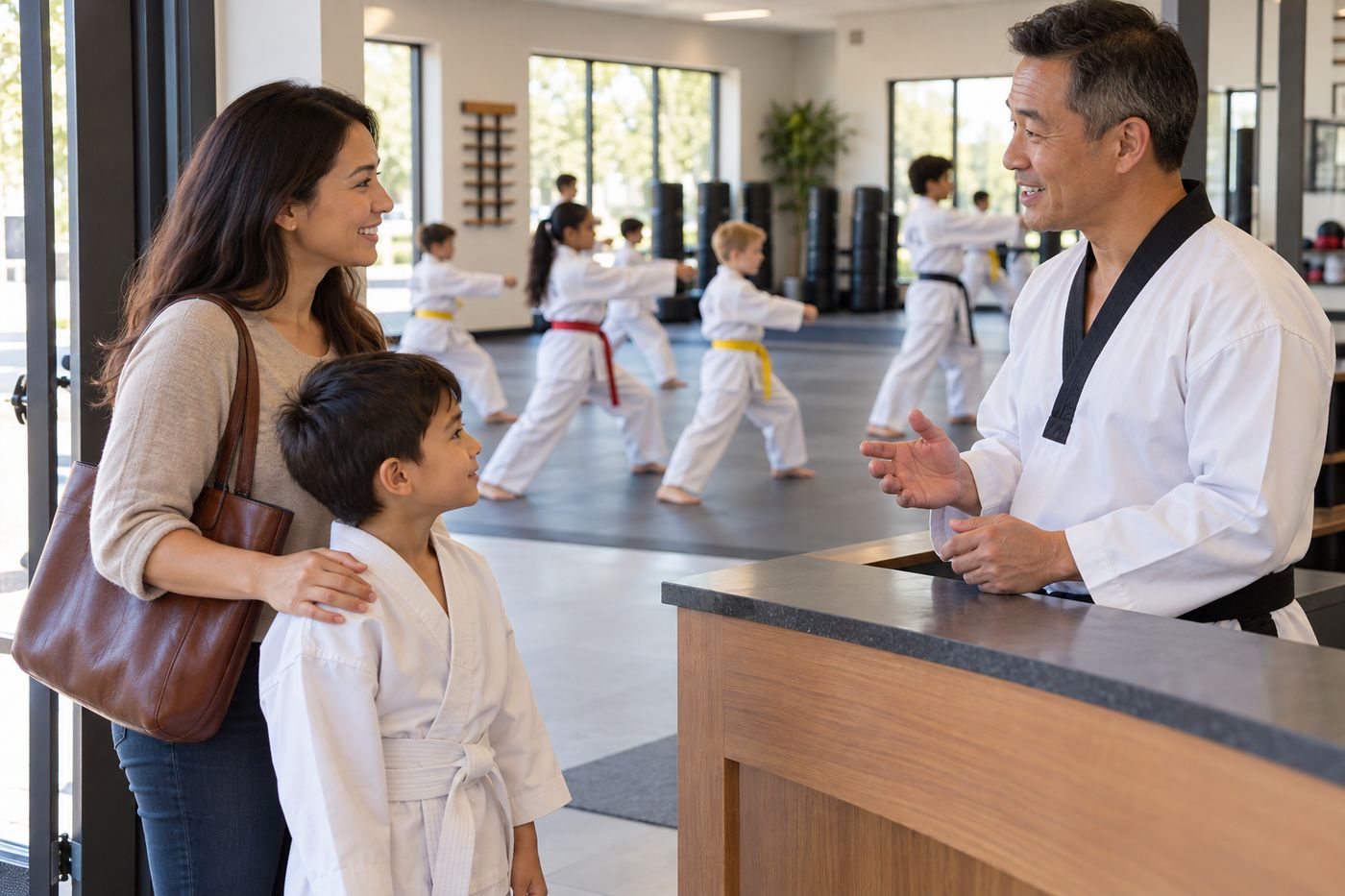
Bring a short list and ask the same questions at each school so you can compare. Which style do you teach, and who certifies your black belts? What rank and certifications does the head instructor hold? Who teaches the children’s classes? How many students are in a typical class? How often are belt tests, what do they cost, and how long does black belt usually take? Is there a trial period, and can I pay month to month? What gear do we need, and when does sparring start?
Trust what your child tells you
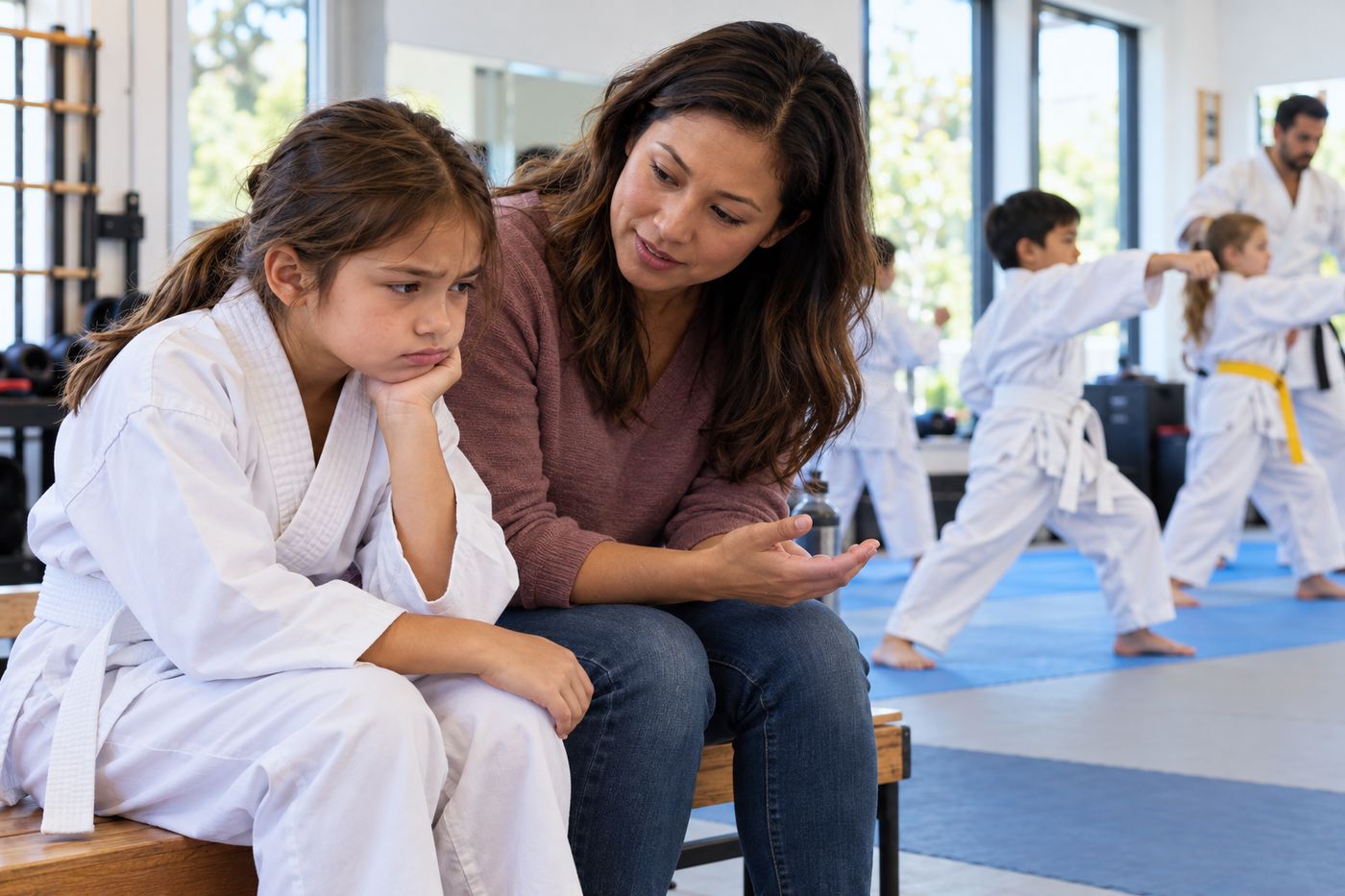
After a trial class, ask your child what they thought. Did they have fun? Did they feel safe? Did the instructor help them? A school that is excellent on paper but leaves your child unhappy is not the right school. And give the decision a few weeks: almost every child finds the first classes a little overwhelming. Our guide to the first month of Taekwondo explains what is normal, and is Taekwondo good for kids covers the benefits and the right starting age.
Questions parents and students ask
How do I know if a Taekwondo school is legitimate?
Ask which organization certifies its black belts (for Olympic-style schools, usually the Kukkiwon), what rank and certification the head instructor holds, and whether you can watch a regular class. A good school answers all three without hesitation.
Should I sign a long Taekwondo contract?
Be careful. Many schools offer discounts for 12-month or black belt program contracts, but children's interests change. Ask about a trial period, month-to-month options and the cancellation policy in writing before signing.
How fast should my child get belts?
Most good schools test color belts every two to four months, and black belt usually takes three to five years. A school that promises black belt in a year or less is worth asking more questions about.